
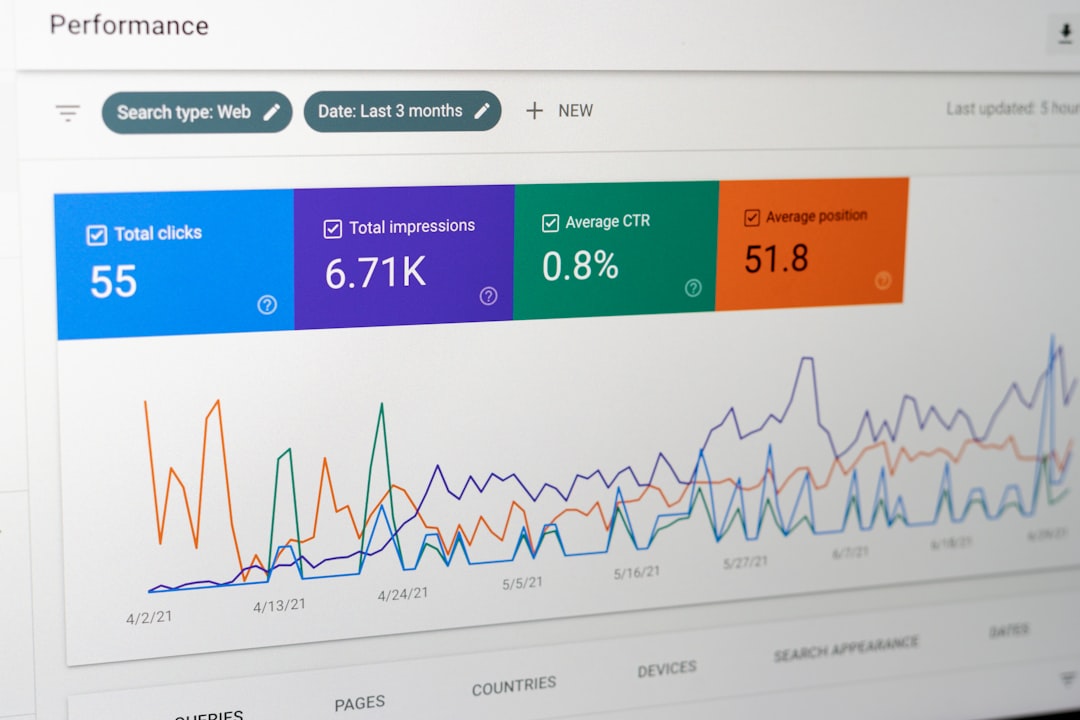
Over a 4-week window, clearpostplugin.com generated 2,748 impressions and 29 clicks in Google Search Console. That is a 1.06 percent click-through rate. The homepage alone produced 24 of those 29 clicks. The remaining 76 pages on the site combined for 5. This is new website SEO data from a domain launched in 2026 with no backlink profile, and the numbers tell a story that most content marketing advice skips.
We are publishing these numbers because unflattering first-party data is more useful than another generic CTR benchmark. If you are building a new site and wondering why your blog content is not driving traffic, here is what it actually looks like before you have domain authority.
The Raw Numbers
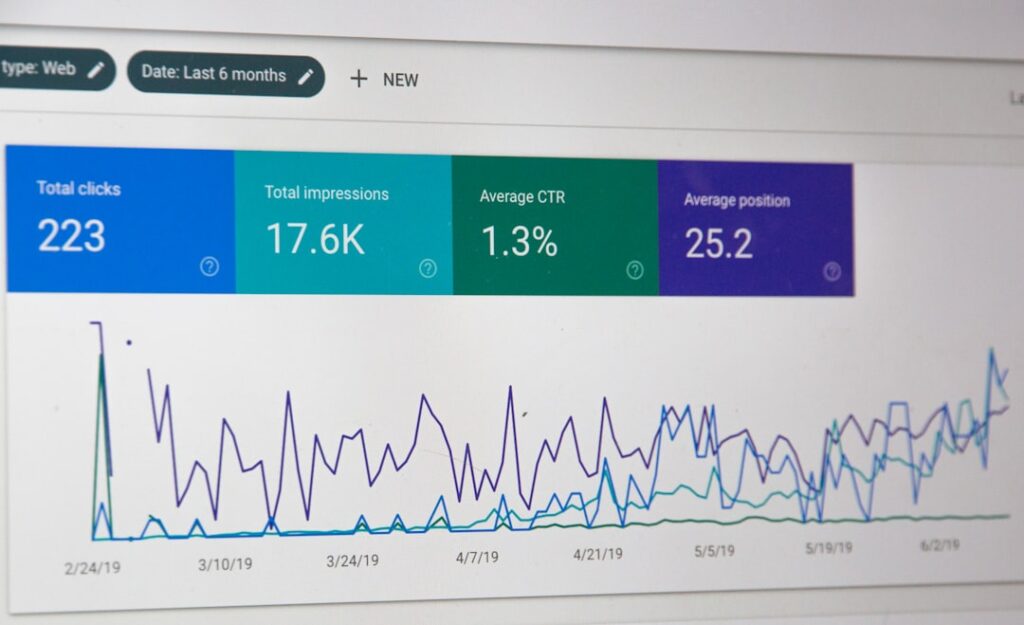
Here is the full picture from Google Search Console for clearpostplugin.com over a 4-week period. Every figure is pulled directly from our GSC account. No rounding, no aggregation tricks.
| Metric | Value |
|---|---|
| Total impressions | 2,748 |
| Total clicks | 29 |
| Overall CTR | 1.06% |
| Homepage impressions | 411 |
| Homepage clicks | 24 |
| Homepage CTR | 5.8% |
| Homepage share of all clicks | 83% |
| Blog pages (76 combined) impressions | 1,961 |
| Blog pages (76 combined) clicks | 5 |
| Blog pages CTR | 0.25% |
| Pages that produced at least 1 click | 6 of 77 |
| Pages that produced zero clicks | 71 of 77 |
Two numbers jump out immediately. First, 71 of 77 pages produced zero clicks in the entire month. Second, the homepage CTR of 5.8 percent is 23 times higher than the blog content CTR of 0.25 percent. That 23x ratio is the most useful insight in this dataset, and the rest of this article explains why it exists.
The Homepage Is 83% of All Clicks
The homepage received 411 impressions and converted 24 of them into clicks, a 5.8 percent CTR. That single page accounted for 83 percent of all clicks on the site. The reason is simple: brand and navigational queries.
When someone searches “clearpost” or “clearpost plugin” or types the domain name into Google instead of the address bar, they are not evaluating options. They are trying to find us. Those queries land the homepage near position 1 or 2, where click-through rates are highest. The searcher already decided to click before they saw the result. That is a fundamentally different intent from someone searching “how to write SEO content for WordPress,” who is comparing results, scanning for the best answer, and may never click any specific result.
This is why brand search converts at a multiple of informational search. It is not that the homepage is better written or better optimized. It is that the query type and the ranking position together produce a click rate that informational blog content on a low-authority site cannot match. For more on how ranking position drives or kills click rates, our first-party GSC analysis on how long it takes new posts to appear in Search Console found that zero clicks across an entire blog cohort was the norm, not the exception, on this same site.
Blog Pages: 1,961 Impressions, 5 Clicks
All 76 non-homepage pages combined produced 1,961 impressions and 5 clicks. That is a 0.25 percent CTR. Only 6 of those 76 pages produced even a single click in the entire 4-week period.
This is the number that should recalibrate expectations for anyone launching a new site. The blog content on clearpostplugin.com is not thin. Posts are 1,500 to 3,000 words, structured with proper heading hierarchy, internally linked, and targeted at specific keywords. The content is fine. The position is the problem.
Google Search Console reports average position for each page. Across the blog content that did receive impressions, the typical average position sits between 10 and 40. That means these pages are showing up somewhere on page 2 through page 4 of search results. At those positions, the click-through rate is near zero regardless of how good the content is. People simply do not scroll that far.
Of the 1,961 blog impressions, the vast majority came from queries where our pages ranked on page 2 or deeper. A handful of impressions came from long-tail queries where we briefly appeared on page 1. Those rare page-1 appearances are where the 5 clicks came from. Everything on page 2 and beyond produced impressions but effectively no clicks.
Why Position Matters More Than Content Quality

Content quality determines whether Google considers your page relevant enough to rank. Position determines whether anyone sees it. On a new site with no backlink profile, your blog content will rank, but it will rank at positions 10 to 40. At those positions, CTR is effectively zero. This is not a content quality problem. It is a position problem.
The relationship between ranking position and click-through rate is steep and non-linear. Industry data from First Page Sage’s 2026 CTR report shows the drop-off clearly:
| Position | Industry Average CTR | What It Means for a New Site |
|---|---|---|
| 1 | 39.8% | Brand and navigational queries land here |
| 2 | 18.7% | Strong brand presence or exact-match intent |
| 3 | 10.2% | Still capturing meaningful clicks |
| 4 | 7.2% | Clicks dropping fast |
| 5 | 5.1% | Last position with meaningful CTR |
| 6 | 4.4% | Below 5%, clicks becoming scarce |
| 7 | 3.0% | Minimal clicks |
| 8 | 2.1% | Minimal clicks |
| 9 | 1.9% | Near zero |
| 10 | 1.6% | Last result on page 1, near zero |
| 11 to 20 | Approx. 0.5% or less | Page 2. Almost no clicks. |
| 21 to 40 | Approx. 0.1% or less | Pages 3 to 4. Effectively invisible. |
These industry averages come from a dataset across established domains. A new site with no authority will perform worse than these averages at every position, because lower authority means lower trust signals, which can push your effective CTR below the industry line.
Now look at the math. Our blog content averaged between position 10 and 40. At position 10, the industry CTR is 1.6 percent. At position 20 and beyond, it is under 0.5 percent and dropping fast. Our measured blog CTR of 0.25 percent sits right where you would expect for content averaging positions 15 to 30. The content is not underperforming relative to its position. It is performing exactly as position-based CTR predicts.
This is the insight that changes strategy: you do not have a content quality problem. You have a position problem. Publishing more articles at the same quality level does not fix a position problem. It just creates more pages that rank at position 20 and get zero clicks. For a deeper look at how to monitor whether your pages are climbing toward the positions that actually produce clicks, our weekly keyword ranking monitoring process walks through the exact workflow.
What This Means If You Are Starting From Zero

If you are launching a new site in 2026, here is what our data says about what to expect and what to prioritize.
Publishing more does not produce clicks until you rank top 5
71 of 77 pages on our site produced zero clicks in a month. The 6 pages that did produce clicks were either the homepage (brand queries) or blog posts that briefly touched page 1 for specific long-tail queries. Publishing 50 more articles at position 20 produces 50 more pages with zero clicks. The volume lever does not work until the position lever moves first.
Brand queries are your only reliable click source early on
The homepage produced 83 percent of all clicks because brand and navigational queries rank near position 1. On a new site, the only queries where you will rank that high are queries containing your brand name. That means early traffic depends on people knowing your name, not on Google discovering your content. PR, direct outreach, partnerships, and word of mouth drive brand awareness. Those channels produce brand searches. Brand searches produce clicks. This is the flywheel that starts before SEO compounds.
The real job is moving pages from position 20 to position 5
The math is simple. A page at position 20 with 200 impressions and a 0.1 percent CTR produces zero clicks. The same page at position 5 with the same 200 impressions and a 5.1 percent CTR produces 10 clicks. Nothing about the content changed. Only the position changed. This is why your effort should go into moving existing pages up, not publishing new pages that will land at the same depth.
What moves pages up on a new site? Targeting lower-competition keywords where the top results are not authority domains. Building topical clusters of 5 to 10 related posts that link to each other, which signals expertise. Earning even a handful of backlinks from relevant sites, which moves the domain authority needle from zero to something. And refreshing pages that have climbed to position 8 to 12, where a targeted improvement can push them onto page 1. For the cost calculus behind how much to invest per post while you wait for positions to improve, our real blog content cost per post breakdown covers the numbers.
Sample Limitations, Stated Plainly
These numbers come from one site, clearpostplugin.com, over one 4-week window. The domain is new, launched in 2026, with no backlink profile. The niche is B2B SaaS SEO for WordPress, which is competitive. The total sample is 2,748 impressions and 29 clicks. That is small. A single viral post or a single high-volume keyword ranking could shift every percentage in this article.
Do not treat these numbers as an industry benchmark. They are not. They are observations from one data point at one point in time. An established domain with hundreds of backlinks, years of age, and topical authority will see different numbers at every position. A new site in a less competitive niche may see faster ranking improvements. A new site with aggressive link building may move pages to page 1 faster than we did.
What is generalizable is not the specific numbers. It is the pattern. Brand and navigational queries convert at a multiple of informational queries on low-authority sites because they rank higher. Blog content ranks lower and gets fewer clicks regardless of quality. Position-based CTR explains the gap. That pattern will hold across sites, even if the specific ratios differ.
One more limitation: Google Search Console has a roughly 3-day reporting delay and rounds impression counts. The 2,748 figure may shift slightly if you pull the same date range on a different day. We pulled this data with a buffer to account for the delay, but small fluctuations are normal. The headline finding, that brand queries outperform informational content by a wide margin on a new site, does not depend on whether the exact impression count is 2,748 or 2,760.
Frequently Asked Questions
What is a normal click-through rate for a new website?
Based on our first-party data from a new site with no backlink profile, the overall CTR was 1.06 percent across 2,748 impressions and 29 clicks over 4 weeks. However, this is one site with a small sample and is not an industry benchmark. Your CTR will depend on your domain authority, query types, and ranking positions.
Why does brand search get more clicks than blog content on a new site?
Brand and navigational queries like your site name or homepage URL rank near position 1, where CTR is highest. Informational blog content on a new, low-authority site typically ranks at positions 10 to 40, where click-through is near zero regardless of content quality. On our site, brand queries converted at roughly 23 times the rate of informational blog pages.
How many blog posts do I need before I get organic traffic?
Publishing more articles does not produce clicks until your pages can rank in the top 5 results. On our site, 71 of 77 pages produced zero clicks in the measured period. The limiting factor is ranking position, not content volume. Focus on keyword targeting, topical depth, and building domain authority rather than publishing volume alone.
Is 1.06 percent CTR good or bad for a new site?
It is neither good nor bad. It is what a new site with no backlink profile measured. The headline CTR is skewed by brand queries to the homepage. The blog content CTR of 0.25 percent is closer to what most new informational pages will see until they climb into the top 5 to 10 positions.
Can I use these numbers as a benchmark for my own site?
No. These figures come from one site, clearpostplugin.com, with 2,748 impressions over 4 weeks. The sample is small, the domain is new, and the niche is competitive. Established domains with backlink profiles will see different numbers. The value is in the methodology and the position-based explanation, not in the specific figures.
Frequently Asked Questions
What is a normal click-through rate for a new website?
Based on our first-party data from a new site with no backlink profile, the overall CTR was 1.06 percent across 2,748 impressions and 29 clicks over 4 weeks. However, this is one site with a small sample and is not an industry benchmark. Your CTR will depend on your domain authority, query types, and ranking positions.
Why does brand search get more clicks than blog content on a new site?
Brand and navigational queries like your site name or homepage URL rank near position 1, where CTR is highest. Informational blog content on a new, low-authority site typically ranks at positions 10 to 40, where click-through is near zero regardless of content quality. On our site, brand queries converted at roughly 23 times the rate of informational blog pages.
How many blog posts do I need before I get organic traffic?
Publishing more articles does not produce clicks until your pages can rank in the top 5 results. On our site, 71 of 77 pages produced zero clicks in the measured period. The limiting factor is ranking position, not content volume. Focus on keyword targeting, topical depth, and building domain authority rather than publishing volume alone.
Is 1.06 percent CTR good or bad for a new site?
It is neither good nor bad. It is what a new site with no backlink profile measured. The headline CTR is skewed by brand queries to the homepage. The blog content CTR of 0.25 percent is closer to what most new informational pages will see until they climb into the top 5 to 10 positions.
Can I use these numbers as a benchmark for my own site?
No. These figures come from one site, clearpostplugin.com, with 2,748 impressions over 4 weeks. The sample is small, the domain is new, and the niche is competitive. Established domains with backlink profiles will see different numbers. The value is in the methodology and the position-based explanation, not in the specific figures.