

You’ve seen the posts. “Just ask ChatGPT to write your blog!” Five seconds later, you have 800 words of beige, generic, keyword-stuffed prose that sounds like it was written by a committee of robots who’ve never spoken to an actual human. You publish it anyway because you’re swamped, and then wonder why it doesn’t rank, doesn’t convert, and doesn’t sound anything like you.
That’s the one-prompt approach. And it’s why so many solo founders and lean marketing teams walk away from AI tools convinced they don’t work — when the real problem is the workflow, not the technology.
Generative AI adoption more than doubled in a single year, rising from 33% to 71% between 2023 and 2024, with marketers saving an average of 3 hours per piece of content. But there’s a catch: 52% of consumers reduce engagement when they suspect AI-generated content. That tension — huge efficiency gains, fragile reader trust — is exactly why your process matters more than your tool.
This guide walks you through the 6-stage workflow we use at ClearPost to produce content that ranks, reads like a human wrote it, and doesn’t take all day. Total time: about 75 minutes per post, versus 4–6 hours the old-fashioned way.
Why the One-Prompt Approach Produces Garbage (And Gets You Caught)
Sending a single vague prompt to an AI model is the content equivalent of asking a junior contractor to build your house with no blueprints. You’ll get something — just nothing you’d actually want to live in.
Here’s what actually goes wrong:
No competitive context. AI has no idea what your top-ranking competitors already cover, what angles are oversaturated, or what genuine gaps exist. It defaults to the most common interpretation of your topic — which means you get the same post everyone else has.
No brief, no constraints. Without a tight brief — word count, target audience, key argument, things to avoid — the model is guessing at what “good” looks like for your specific situation. It fills gaps with filler.
No voice. AI defaults to a neutral, confident, slightly formal register that reads like a consultant’s slide deck. While 77% of marketers believe AI effectively crafts emotionally resonant content, only 33% of consumers agree — a 44-point gap that tells you something real about the quality of unedited AI output.
It’s detectable — and penalised. Google’s March 2025 core update reduced rankings for 61% of sites with over 80% unedited AI-generated content, but had minimal impact on sites using AI-assisted workflows with human editing. The lesson isn’t “don’t use AI.” It’s “don’t skip the human pass.”
The fix isn’t a better prompt. It’s a better process.
The 6-Stage Workflow for AI Content That Passes the Human Test
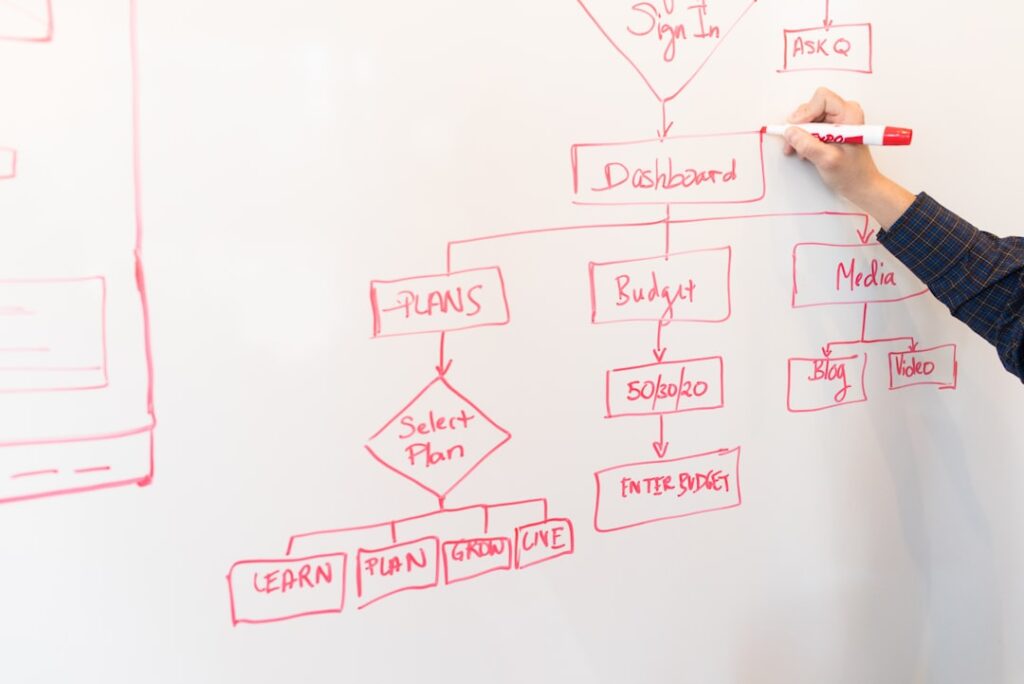
This workflow was designed for solo operators and one-to-three-person marketing teams. Every stage has a clear output and a quality checkpoint. AI handles the heavy lifting; you apply judgment at the moments that actually matter.
Stage 1: Research and Competitive Analysis (15 min)
Before you write a single word, understand what’s already out there and what’s missing. This is where most one-prompt writers skip straight to the disaster.
Open a private browser and search your target keyword. Read the top 5 results. Ask yourself three questions:
1. What angle do all of them share? That’s the oversaturated lane. Avoid it or do it substantially better. 2. What do none of them answer well? That’s your opening — the gap your post fills. 3. What does the reader actually want that the top results dance around? That’s your hook.
Then use a tool like AnswerThePublic, Google’s “People Also Ask” box, or even a Reddit thread search to capture the exact language your audience uses when they’re frustrated, confused, or looking for help. This raw language belongs in your brief and your final post.
Quality checkpoint: You should be able to answer, in one sentence, what makes your post different from the top results. If you can’t, you don’t have an angle yet — keep digging.
Stage 2: Write the Brief AI Will Actually Follow (10 min)
A brief isn’t a prompt. A brief is a single document — even just a block of text — that tells the AI exactly who it’s writing for, what the post needs to accomplish, what to include, and what to avoid. The quality of your brief is the single biggest predictor of draft quality.
Your brief should cover:
Target reader: One specific person, not a demographic. “A solo founder running a Shopify store who’s tried blogging before but stopped because it wasn’t working.”
The core argument: What is the single most important thing this post proves or demonstrates? Write it as a sentence, not a topic.
Sections to cover: Pull these from your competitive analysis gaps. If every competitor covers “what is X” but nobody explains “when X fails,” that goes in your brief.
Things to avoid: Generic openers, vague advice, competitor mentions, phrases that set off AI detectors (“It’s important to note,” “In today’s fast-paced world,” “Dive in”).
Tone and voice cues: Three to five adjectives plus one example sentence. “Direct, honest, a little impatient with nonsense. Example: ‘Here’s the part nobody mentions in the polished case studies.’”
Quality checkpoint: Could a freelance writer you’ve never met produce a post you’d be happy to publish, using only this brief? If the answer is no, your brief needs more detail.
Stage 3: Generate the First Draft (5 min)
Now you run the brief. This is genuinely the fastest stage. Paste your brief into your AI model of choice — ChatGPT, Claude, or Gemini all work — and add a short prompt wrapper. The draft is a starting point, not a finished product. Treat it like a rough clay form that you’re about to sculpt.
Two things to do immediately when the draft lands:
Read it start to finish without editing. Get a feel for what it got right and where it went wrong. Mark the sections that are accurate but lifeless, and the ones that are flat-out wrong or generic. Don’t fix yet — just triage.
Check facts instantly. AI confabulates. Any statistic, named study, quote, or specific claim needs a 30-second Google verification before it goes anywhere near your post. This is non-negotiable.
Quality checkpoint: Does the draft address the core argument from your brief? Does it open with something a human would actually read past the first sentence? If it starts with “In today’s competitive landscape,” go back and re-prompt with a stricter instruction on the opening.
Stage 4: The Voice Pass — Make It Sound Like You (20 min)
This is the most important stage and the one most people skip entirely. The voice pass is where a generic AI draft becomes your content. It’s also the stage that determines whether readers trust you — or click away.
What to do in the voice pass:
Rewrite the introduction completely. Almost every AI intro is too slow to the point and too polite about it. Start mid-thought. Start with the reader’s frustration. Start with a number or a specific scenario. The AI version is almost never the right opener.
Inject your real opinions. AI is trained to be balanced and hedged. You have actual views — on what works, what doesn’t, what’s overrated. Put them in. “In our experience running content for WordPress sites, X approach consistently outperforms Y, and here’s the specific reason why.”
Add at least one original example or anecdote. A single concrete, specific story from your own work does more for reader trust than three paragraphs of well-structured advice. AI can’t supply this. You can.
Break up the rhythm. AI tends to write in even-length paragraphs with consistent structure. Real writers vary sentence length, drop a one-liner, use a rhetorical question. Read your post out loud — anywhere it sounds robotic, rewrite it.
Cut 20% of the word count. AI pads. Every post benefits from removing the explanatory sentences that explain the sentence that just preceded them. If a paragraph can be cut without losing meaning, cut it.
Quality checkpoint: Read the post aloud. Does it sound like you talking to a smart colleague, or does it sound like a corporate white paper? If it’s the latter, keep editing. AI content detection tools achieve 71% accuracy on heavily human-edited content versus 89% on fully unedited AI drafts — a good voice pass dramatically lowers your detection risk and, more importantly, dramatically raises reader engagement.
Stage 5: SEO and AEO Optimization Pass (15 min)
SEO optimization comes after voice — not before. If you optimize first, you end up with a post that’s structured for algorithms and tedious for humans. Get the human version right, then tune it for search.
In this pass, address five things:
Title and meta description. Your focus keyword should appear naturally in the title and within the first 160 characters of your meta description. Don’t stuff it — use it once, clearly.
Heading structure. Each H2 should address a distinct sub-question your reader has. Scan your headings as a list — do they tell a coherent story on their own? They should.
Answer Engine Optimization (AEO). AI search tools like ChatGPT, Perplexity, and Google AI Overviews pull from content that answers questions directly and concisely. For every major question your post answers, make sure there’s a short, standalone paragraph (2–3 sentences) that directly answers it without requiring context from the rest of the post. These are your snippet candidates. AI-assisted content with human editing earns 12% more citations in AI search results than purely human-written content, largely due to better structural formatting — so this structural discipline pays off twice.
Internal links. Link to 2–3 related posts on your site. These build topical authority and keep readers engaged. Don’t add them as afterthoughts — link from genuinely relevant anchor text within the body of the post.
Image alt text and schema. If your post includes images, write descriptive alt text. If you’re running on WordPress, check that your SEO plugin is pulling the right title, meta, and schema type for the post.
Quality checkpoint: Search your focus keyword in Google. Does your title offer something meaningfully different from the top results? Would you click it over what’s already ranking? If not, rework the title.
Stage 6: Final Review and Publish (10 min)
The final pass is about catching what the previous stages missed. Read the post one more time — not as a writer, but as your target reader on a Tuesday afternoon with limited patience.
Check these five things before hitting publish:
Every factual claim is verified. If you cited a stat, you checked the original source. No invented studies, no hallucinated quotes.
The opening earns the next click. The first 100 words should make a reader think “yes, this is the post I was looking for.” If it doesn’t, rewrite the intro — it’s worth the 5 minutes.
The CTA is clear and low-pressure. What do you want the reader to do next? Make it one thing, make it obvious, and don’t oversell it.
Mobile formatting looks right. Check the preview on mobile. Long unbroken paragraphs that look fine on desktop become walls of text on a phone.
You’d genuinely share this. The final gut check. Would you send this post to a smart colleague and feel confident it represents your thinking? If yes, publish it. If not, it needs one more pass.
The Prompts We Use for Each Stage (Copy and Customize)
These are the actual prompt frameworks we use at each stage. Copy them, paste them into your AI tool, and replace the bracketed placeholders with your specifics. The more detail you put in, the better the output.
| Stage | Goal | Prompt Framework | Time |
|---|---|---|---|
| Stage 1: Research | Identify gaps and angles | “I’m writing a post about [TOPIC] for [AUDIENCE]. Based on what typically ranks for this topic, what questions do most articles fail to answer well? List 5 underserved angles.” | 15 min |
| Stage 2: Brief | Build the creative brief | “Create a detailed content brief for a blog post targeting [KEYWORD]. Target reader: [DESCRIPTION]. Core argument: [ONE SENTENCE]. Include: [LIST]. Avoid: generic advice, passive voice, AI-sounding openers.” | 10 min |
| Stage 3: Draft | Generate structured first draft | “Using the brief below, write a [WORD COUNT]-word blog post. Open with the reader’s specific frustration, not a definition. Use direct, conversational language. [PASTE BRIEF]” | 5 min |
| Stage 4: Voice Pass | Humanize and differentiate | “Rewrite this section in a voice that is [ADJECTIVE 1], [ADJECTIVE 2], and [ADJECTIVE 3]. Here’s an example of our actual writing style: [PASTE SAMPLE]. Remove any sentence that starts with ‘It’s important to note’ or ‘In today’s.’ Cut 15% of the word count.” | 20 min |
| Stage 5: SEO/AEO Pass | Optimize for search and AI snippets | “Review this post for SEO. Suggest: (1) a revised title with [KEYWORD] that would stand out in SERPs, (2) 3 places to add a direct 2-sentence answer to a likely search query, (3) any missing H2 headings for questions we haven’t addressed.” | 15 min |
| Stage 6: Final Review | Catch errors, confirm quality | “Read this post as a skeptical reader who’s seen a lot of AI content. Flag: (1) any claims that seem unsourced, (2) any paragraphs that repeat the previous one, (3) the 3 weakest sentences. Don’t rewrite — just identify.” | 10 min |
What AI Does Better Than Humans (And What It Doesn’t)

Let’s be honest about where AI genuinely helps versus where it consistently falls short. Understanding this split is what separates a productive AI workflow from a frustrating one.
Where AI Outperforms Human-Only Workflows
Structural scaffolding. AI is excellent at generating logical outlines, identifying what sections a post needs, and ensuring nothing obvious is missing. It’s a comprehensive thinker at the structural level — which saves an experienced writer 30–60 minutes per post.
First-draft velocity. For most writers, the blank page is the enemy. An AI-generated first draft — even a mediocre one — provides raw material to react to, edit, and improve. This is dramatically faster than writing from scratch.
Consistent formatting. AI applies formatting conventions (clear H2s, short paragraphs, logical flow) reliably. It doesn’t have bad writing days, writer’s block, or the impulse to structure sections differently based on mood.
Research synthesis. Given a set of facts, sources, or notes, AI is very good at synthesizing them into a coherent narrative. It’s a strong first-pass researcher for topics you don’t already know deeply.
Where Human Judgment Is Non-Negotiable
Original perspective and expertise. AI has no lived experience, no proprietary data, and no genuine opinions. Human expertise, originality, firsthand experience, and well-sourced data are ranking signals that AI systems cannot cheaply mimic. Your unique point of view — your “I’ve tried this 47 times and here’s what I actually learned” — is irreplaceable.
Brand voice and tone. AI defaults to the middle of the bell curve — serviceable, inoffensive, forgettable. Real brand voice requires the specific verbal tics, the willingness to say something direct, and the confidence to have a take. This has to come from you.
Fact verification. AI confabulates with confidence. It will cite studies that don’t exist, attribute quotes to the wrong person, and invent statistics that sound plausible. Every factual claim in an AI draft requires human verification before publication.
Editorial judgment about what readers actually need. AI optimizes for comprehensiveness. But sometimes the right post is short, direct, and leaves out the stuff everyone already knows. That editorial call — what to cut, what angle serves the reader best right now — requires human judgment.
Sensitive topics and nuance. AI is trained to hedge, both-sides, and avoid controversy. If your audience needs a direct opinion on a genuinely contested question, AI will give them mush. You have to supply the backbone.
Tools We Actually Use in This Workflow

There’s no shortage of AI content tools. Here’s an honest breakdown of what works for different stages, without the affiliate-fueled hype.
| Tool | Best For | Honest Caveat | Approx. Cost |
|---|---|---|---|
| ChatGPT (GPT-4o) | Briefs, drafting, voice passes, SEO suggestions | Requires detailed prompting; no memory across sessions unless you configure it | $20/mo (Plus) |
| Claude (Anthropic) | Long-form drafts, nuanced tone, strong instruction-following | Can be overly verbose on first drafts; works best with tight brief | $20/mo (Pro) |
| Perplexity AI | Stage 1 research, competitive gap analysis, fact-checking | Cites sources but still verify — errors occur | Free / $20/mo |
| AnswerThePublic | Finding audience language and long-tail questions | Best for ideation, not keyword volume data | Free tier available |
| Google Search Console | Seeing what queries you already rank for; informing topic selection | 3-day data lag; requires site verification | Free |
| ClearPost | End-to-end AI content workflow inside WordPress — research through publish | Built for WordPress sites specifically; not a standalone writing tool | See site for pricing |
At ClearPost, we’ve built this entire workflow into the WordPress environment so you’re not context-switching between five tabs. You research, brief, draft, edit, optimize, and publish from one place — and you approve every post before it goes live. No surprises.
How to Train AI on Your Brand Voice
Generic AI output is a symptom of generic input. If you want drafts that sound like you — not like everyone else using the same model — you have to teach the AI what your voice actually is.
Step 1: Write Your Brand Voice Brief (10 minutes, once)
Start by distilling your voice into three to five adjectives — then, critically, explain what those adjectives mean in practice for your writing. “AI doesn’t understand nuance unless you give it examples and guardrails.” “Direct” means nothing to a model without context. “Direct means: lead with the conclusion, never build up to it. Cut any sentence that exists to soften the sentence before it.” — that it can work with.
Your voice brief should include:
3–5 voice adjectives with practical definitions. Don’t just say “professional.” Say “professional means: no slang, no rhetorical questions, no exclamation points outside of very specific contexts.”
A “we sound like / we don’t sound like” contrast. “We sound like a senior colleague giving straight advice. We don’t sound like a corporate press release or a motivational poster.”
Phrases we use / phrases we never use. List 5–10 specific banned phrases (e.g., “dive in,” “unlock your potential,” “game-changer”) and 5–10 phrases that are characteristic of your writing.
One example paragraph in your voice. Write 100–150 words of your actual best writing and paste it directly into the brief. This is the single most effective voice signal you can give the model.
Step 2: Give AI Your Best Work as Examples
Instead of describing your voice, show it examples — your past blogs, LinkedIn posts, or website copy — and the model learns the specific patterns that make your writing yours: sentence length, word choices, how you open and close sections, the level of formality you use. Paste 3–5 pieces of your strongest content directly into a custom instruction or system prompt.
For ChatGPT, use the “Custom Instructions” feature to store your voice brief permanently. For Claude, paste it at the top of any new conversation as a system message. Either way, you’re no longer starting from zero every time.
Step 3: Test, Mark, and Iterate
Run a test prompt and read the output critically. Mark every sentence that sounds off-brand. Then add those failure modes to your brief: “The model keeps using ‘leverage’ — add to banned words list.” This continuous refinement helps the model consistently deliver the precise tone you’re aiming for. It takes two or three iterations to dial in — after that, your prompts produce dramatically better starting points.
The Honest Caveat
General-purpose AI tools work from descriptions — you tell them to write “in a professional but approachable tone” and they do their best to interpret that. The output is only as specific as your prompt, and it varies from session to session because there’s no persistent memory of your brand. That’s why the voice pass in Stage 4 remains essential regardless of how well you’ve trained your prompts. Some of that final 20% always needs a human hand.
Want to skip the setup entirely? At ClearPost, your brand voice is stored in the platform and applied automatically to every draft — so you’re not re-pasting a voice brief into a chat window every time you start a new post.
Frequently Asked Questions
Common questions about using AI for content creation, answered directly.
Try This Workflow on Your Next Post — Here’s Your Checklist
Here’s the honest summary: AI for content creation works well when it’s treated as a system, not a shortcut. The one-prompt approach produces content that gets ignored, ranks poorly, and sounds like it was written by nobody in particular. The 6-stage workflow — research, brief, draft, voice pass, SEO/AEO pass, final review — produces content that actually represents you, covers real gaps in the competitive landscape, and takes about 75 minutes instead of half a day.
Before your next post, run through this checklist:
☐ Read the top 5 results for your target keyword and identify the gap your post fills
☐ Write a brief that includes target reader, core argument, sections to cover, and tone cues
☐ Generate the first draft with a prompt that includes the full brief
☐ Verify every statistic and named claim before editing further
☐ Complete the voice pass: rewrite the intro, inject one real example, cut 20%
☐ Do the SEO/AEO pass: title, headings, snippet paragraphs, internal links
☐ Final check: Would you share this with a smart colleague and feel proud of it?
If you’re running this on WordPress and want a tool that handles the research-to-publish pipeline without the context-switching, try ClearPost free for 7 days. No long onboarding, no agency overhead, no commitment. You approve every post before it goes live — that part never changes.
Frequently Asked Questions
Does Google penalize AI-generated content?
Google does not penalize AI-assisted content as a category — it penalizes low-quality, unedited content regardless of how it was produced. Sites using AI-assisted workflows with human editing saw minimal impact from Google’s March 2025 core update, while sites with over 80% unedited AI content saw ranking reductions. The workflow matters more than the tool.
How long does the 6-stage AI content workflow take for a 1,500-word post?
Approximately 75 minutes total: 15 minutes for research and competitive analysis, 10 minutes to write the brief, 5 minutes to generate the first draft, 20 minutes for the voice pass, 15 minutes for SEO and AEO optimization, and 10 minutes for the final review. This is significantly faster than a 4-6 hour human-only writing process.
Can AI really replicate my brand voice?
AI can get close — but not without deliberate training. You need to provide your voice in adjective form with practical definitions, paste examples of your actual best writing, and list specific banned phrases. Even with good training, the Stage 4 voice pass remains essential. AI gives you 70-80% of the way there; the final polish has to come from you.
What’s the difference between SEO optimization and AEO optimization for blog posts?
SEO optimization targets traditional search rankings — keyword placement, heading structure, meta descriptions, and internal links. AEO (Answer Engine Optimization) targets AI search tools like Google AI Overviews, Perplexity, and ChatGPT, which pull short, direct answers from well-structured content. For AEO, you want standalone 2-3 sentence paragraphs that answer specific questions directly, without requiring context from the rest of the post.
How do I fact-check AI-generated content quickly?
For each specific statistic, percentage, named study, or attributed quote in an AI draft, copy the claim into Google and verify it against the original source. If you cannot find the original source within 60 seconds, remove the claim or replace it with hedged language. Never publish a statistic you haven’t verified — AI confabulates plausible-sounding data with confidence.
{“@context”: “https://schema.org”, “@type”: “FAQPage”, “mainEntity”: [{“@type”: “Question”, “name”: “Does Google penalize AI-generated content?”, “acceptedAnswer”: {“@type”: “Answer”, “text”: “Google does not penalize AI-assisted content as a category — it penalizes low-quality, unedited content regardless of how it was produced. Sites using AI-assisted workflows with human editing saw minimal impact from Google’s March 2025 core update, while sites with over 80% unedited AI content saw ranking reductions. The workflow matters more than the tool.”}}, {“@type”: “Question”, “name”: “How long does the 6-stage AI content workflow take for a 1,500-word post?”, “acceptedAnswer”: {“@type”: “Answer”, “text”: “Approximately 75 minutes total: 15 minutes for research and competitive analysis, 10 minutes to write the brief, 5 minutes to generate the first draft, 20 minutes for the voice pass, 15 minutes for SEO and AEO optimization, and 10 minutes for the final review. This is significantly faster than a 4-6 hour human-only writing process.”}}, {“@type”: “Question”, “name”: “Can AI really replicate my brand voice?”, “acceptedAnswer”: {“@type”: “Answer”, “text”: “AI can get close — but not without deliberate training. You need to provide your voice in adjective form with practical definitions, paste examples of your actual best writing, and list specific banned phrases. Even with good training, the Stage 4 voice pass remains essential. AI gives you 70-80% of the way there; the final polish has to come from you.”}}, {“@type”: “Question”, “name”: “What’s the difference between SEO optimization and AEO optimization for blog posts?”, “acceptedAnswer”: {“@type”: “Answer”, “text”: “SEO optimization targets traditional search rankings — keyword placement, heading structure, meta descriptions, and internal links. AEO (Answer Engine Optimization) targets AI search tools like Google AI Overviews, Perplexity, and ChatGPT, which pull short, direct answers from well-structured content. For AEO, you want standalone 2-3 sentence paragraphs that answer specific questions directly, without requiring context from the rest of the post.”}}, {“@type”: “Question”, “name”: “How do I fact-check AI-generated content quickly?”, “acceptedAnswer”: {“@type”: “Answer”, “text”: “For each specific statistic, percentage, named study, or attributed quote in an AI draft, copy the claim into Google and verify it against the original source. If you cannot find the original source within 60 seconds, remove the claim or replace it with hedged language. Never publish a statistic you haven’t verified — AI confabulates plausible-sounding data with confidence.”}}]}