

You saw the ad: “Local SEO services starting at $499/month.” Another promised page-one rankings for $899. A third quoted $2,000 with “comprehensive local visibility.” Three providers, three prices, and you have no way to compare them because none listed what you actually get. This is the problem with shopping for local SEO services on price alone: the headline number tells you nothing about the deliverables behind it.
Ahrefs surveyed 439 SEO providers and found that local SEO averages $1,557 per month. That number is useless without context. A $1,500 retainer that delivers 2 blog posts, 4 Google Business Profile updates, citation monitoring, and a review response program is a different product entirely from a $1,500 retainer that sends you a rank tracking PDF and calls it “ongoing optimization.” The difference is not the price. It is the deliverables per dollar, and that is the number almost no small business owner calculates.
This guide gives you a cost-per-deliverable framework so you can audit any local SEO quote, identify padding, and compare the content layer of a local SEO retainer against an AI-assisted WordPress workflow that may cost a fraction as much for the same output.
What Local SEO Services Actually Cover (and What They Don’t)
Legitimate local SEO services split into three buckets: on-page optimization (your website), off-page signals (everything else on the web), and reporting. A provider worth hiring covers all three. The cheapest packages cover one, and it is usually the one that requires the least ongoing work.
On-Page: The Work on Your Website
On-page local SEO includes page titles, meta descriptions, LocalBusiness schema markup, internal linking between service and location pages, page speed, mobile responsiveness, and content quality on your core pages. This is the bucket where most small business owners get the least value from an agency retainer, because it is also the bucket where a WordPress plugin with AI-assisted content can handle most of the work at a fraction of the cost.
If your agency’s on-page deliverable is 2 blog posts per month at $400 per post, and a WordPress-native AI workflow produces the same 2 posts at $15 to $40 each with SEO fields pre-filled, the on-page layer is where you are overpaying by 10x or more. For a full breakdown of how that per-post math works, our automated blog posts cost comparison walks through the numbers at 8 posts per month with every hidden layer accounted for.
Off-Page: Google Business Profile, Citations, and Reviews

This is where local SEO earns its keep. Google Business Profile (GBP) management is the single highest-impact local ranking factor. Citation consistency across directories (Yelp, Bing, Apple Maps, Nextdoor) ensures your NAP data matches everywhere. Review acquisition and response builds trust signals. Local link building from community sites and local press adds domain authority.
This work is genuinely hard to automate and is where a specialist or dedicated tool adds real value. BrightLocal’s Citation Builder starts at $2 to $3.20 per listing on a pay-as-you-go basis, with no monthly subscription required. Their managed SEO service runs $1,299/month if you want the full done-for-you package. The point: off-page local SEO has a real, definable cost, and you can calculate it.
Reporting: The Invisible Layer
Rank tracking, traffic measurement, Search Console monitoring, and monthly performance reporting. This is where most agencies pad their retainers. A monthly PDF with rank positions and traffic charts is not a deliverable; it is a receipt. BrightLocal’s Track plan at $29/month gives you the same rank tracking and audit data that agencies bundle into $800 to $1,500 packages and label “comprehensive monthly reporting.”
If more than 20% of your retainer goes to reporting, you are subsidizing the agency’s internal tools, not your search visibility.
The Real Cost of Local SEO Services in 2026
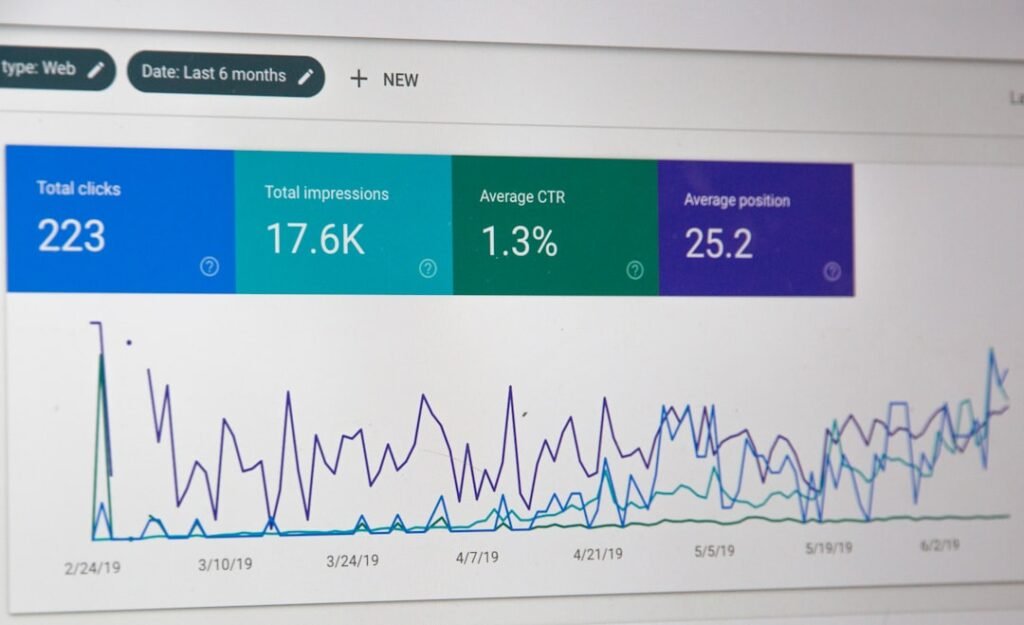
Most single-location businesses pay $500 to $2,000 per month for local SEO services in 2026. Below $300, you are typically buying software-generated reports, not human work. Above $2,000, you are paying for competitive markets, multiple locations, or aggressive content programs that a single-location business in a moderate niche probably does not need.
The table below breaks down what each tier actually delivers, so you can calculate cost per deliverable and compare any quote against it.
| Tier | Monthly Cost | Typical Deliverables | Cost Per Content Asset |
|---|---|---|---|
| Commodity | $300 to $800 | GBP posts, basic citation cleanup, monthly report | $75 to $200 per meaningful action |
| Competent | $800 to $2,000 | GBP management, citations, reviews, 2 to 4 content pages or posts, reporting | $200 to $400 per content asset |
| Comprehensive | $2,000 to $4,000 | Active strategy, competitive research, 6 to 10 content assets, link building, technical SEO | $200 to $400 per content asset |
| AI-Assisted WordPress | Varies by plan | Up to 30 SEO-optimized posts/month, on-page SEO, internal linking, approval gate | $15 to $40 per published post |
Read that table carefully. The cost per content asset is the number that matters, because content production is typically 50 to 70% of a local SEO retainer’s actual work hours. At the competent tier ($1,200/month for 3 content assets), you are paying $400 per content asset. At the comprehensive tier ($3,000/month for 8 content assets), you are paying $375 per asset. The per-asset cost barely drops as you scale up, because agency overhead grows with the team, not the output.
Now compare that to the AI-Assisted WordPress row. A WordPress-native plugin that handles keyword research, drafting, on-page SEO, internal linking, and publishing via REST API produces the same content assets at $15 to $40 per published post. The content layer of your local SEO retainer is where the 10x cost gap lives, and it is the layer you can most easily replace without losing quality if you maintain a human approval gate.
For a tool-by-tool cost breakdown at 8 posts per month, our AI content writer pricing comparison computes the real cost per post for five tools with every hidden layer accounted for, including images, SEO optimization, and publishing labor.
Red Flags: 5 Signs a Local SEO Provider Will Waste Your Money

1. No Deliverable List in the Proposal
“Ongoing optimization” is not a scope of work. “Monthly local SEO management” is not a deliverable. If the proposal does not list exactly how many GBP posts, how many content pages, how many citation sources, what reporting cadence, and what review program activities, you have no way to audit the work. A provider who will not commit to a deliverable list in writing is a provider who plans to bill you for effort, not results.
2. Reporting That Is Just a PDF of Rank Positions
A rank tracking report tells you where you rank. It does not tell you what work was done. If your monthly deliverable is a 5-page PDF with charts and no action items, you are paying for reporting, not SEO. Rank tracking is a $29/month software feature, not a $1,500/month service.
3. Content Volume That Does Not Match the Price
At $1,500 per month for 2 blog posts, you are paying $750 per post. A competent freelance writer charges $150 to $300 per post. An AI-assisted WordPress workflow with an approval gate costs $15 to $40 per post. If your provider’s content volume is 2 to 4 posts per month at $1,500+, ask what the other $700 to $1,200 per month is buying. If the answer is “strategy and reporting,” you are paying senior prices for the planning layer and junior prices for the execution layer, which is the worst of both.
4. Long Contract With No Exit Clause
Local SEO is ongoing work, and most providers bill monthly. But a 12-month contract with no early termination clause is not a commitment to results; it is a commitment to revenue. A provider confident in their work lets you evaluate month to month. A provider who locks you in for a year knows the first 90 days will look like progress and months 4 through 12 will look like maintenance. Ask for a 90-day out clause minimum.
5. No Mention of Google Business Profile Management
If the proposal leads with “content marketing” and “backlink building” but never mentions GBP optimization, review generation, or citation management, the provider is selling you generic SEO and calling it local. Local SEO without GBP management is not local SEO. It is standard SEO with a local keyword sprinkled in. The off-page local signals are where map-pack rankings live, and map-pack is where local customers click.
When DIY Content + Automation Beats an Agency Retainer
The content layer of a local SEO retainer is where AI-assisted WordPress workflows win decisively, and it is often 50 to 70% of the retainer’s cost. The off-page layer (GBP management, citations, reviews) still benefits from a specialist or a dedicated tool like BrightLocal. But the on-page content production, which is the most expensive and most often padded line item, is where a WordPress-native plugin with an approval gate produces the same output at a fraction of the cost.
Here is the math. A local SEO retainer at $1,200 per month delivering 3 blog posts plus GBP management and citation monitoring is charging roughly $400 per content asset. A WordPress-native AI plugin produces the same 3 posts with keyword research from your Search Console data, on-page SEO, internal linking, meta descriptions, and schema markup at $15 to $40 per post. The content layer drops from $1,200 per month to $45 to $120 per month. The difference is what you reallocate to GBP management, citation building, or pocket.
The approval gate is what makes this safe. AI does the heavy lifting: keyword research, drafting, on-page SEO, internal linking. You approve every post before it goes live. No auto-published drafts, no unreviewed output, no brand damage from hallucinated statistics or off-brand messaging. The human review step is the mechanism that determines whether your content strategy compounds or collapses. For more on why publishing cadence matters for rankings, our guide on how many blog posts it takes to see organic traffic breaks down the relationship between consistency, topical depth, and ranking outcomes.
What You Still Need a Human For
The off-page layer does not automate well. GBP optimization requires understanding your business categories, service areas, and customer review patterns. Citation building requires manual submission to directories that do not have APIs. Review response requires human judgment and brand voice. Local link building requires relationship-building with community sites and local press.
These tasks are where a freelancer or a specialist tool adds genuine value. The mistake is paying full agency prices for the content layer when a WordPress plugin handles it for less than $100/month. Split the budget: spend on the off-page work that requires human expertise, and automate the on-page content that does not.
The Hybrid Approach That Actually Works
The smartest local SEO budget for a single-location small business in 2026 is not all-agency and not all-DIY. It is a hybrid: a freelancer or specialist tool handling GBP management, citations, and reviews ($300 to $600/month), plus a WordPress-native AI plugin handling content production ($15 to $40 per post). Total monthly cost: $400 to $800 for the same deliverables an agency charges $1,500 to $2,000 for. The difference is not cutting corners. It is cutting overhead.
For a detailed cost breakdown of what different AI content tools charge per published post, our AI content writer pricing guide breaks down five tools at 8 posts per month with every hidden cost layer accounted for.
Stop Paying for Less Than You Are Getting
Audit your current provider’s next invoice. Ask for the deliverable list: exactly how many GBP posts, how many content pages, how many citation sources, what review activities. Divide the monthly retainer by the number of tangible deliverables. If the content layer is where your money goes and you are paying $400 per post for work a WordPress-native AI workflow produces at $15 to $40 per post, you know exactly where to cut.
The cost-per-deliverable framework works because it is provider-agnostic. It does not matter whether your provider is an agency, a freelancer, or a DIY tool stack. The math is the same: total cost divided by countable deliverables equals cost per unit. If that number is higher than the alternatives for the same quality, you are paying for overhead, not outcomes.
Try ClearPost free for 7 days. AI does the heavy lifting: keyword research from your Search Console data, drafting with SEO structure, internal linking, meta generation, and one-click publishing via REST API. You approve every post before it goes live. No long onboarding, no agency overhead, cancel anytime. See what 30 SEO-optimized posts a month looks like compared to the 4 you are getting now.
Frequently Asked Questions
How much do local SEO services cost in 2026?
Local SEO services average $1,557 per month according to Ahrefs’ survey of 439 providers. Agencies charge around $1,819/month and freelancers around $1,150/month. Most single-location businesses pay $500-$2,000/month depending on market competition and scope of work.
What should local SEO services include?
Legitimate local SEO services include Google Business Profile management, citation consistency across directories, review acquisition and response, on-page optimization with titles, meta descriptions, schema markup and internal linking, content production, rank tracking, and monthly reporting. If a provider does not mention GBP management, they are selling generic SEO, not local.
How do I calculate cost per deliverable for local SEO?
Divide the monthly retainer by the number of tangible, countable deliverables such as blog posts, GBP posts, citation updates, and review responses. For example, $1,500/month for 3 blog posts plus GBP management equals roughly $400 per content asset plus overhead for off-page work.
Can AI replace a local SEO agency?
AI can replace the content production layer of a local SEO retainer, which is often 50-70% of the cost. A WordPress-native AI plugin with an approval gate produces SEO-optimized posts at $15-$40 each versus $400+ per post from an agency. The off-page work including GBP management, citations, and reviews still benefits from human expertise or dedicated tools.
What are red flags when hiring a local SEO provider?
Five red flags: no deliverable list in the proposal, reporting that is just a rank tracking PDF, content volume that does not match the price, long contracts with no exit clause, and no mention of Google Business Profile management. Any of these signals means you are paying for overhead, not outcomes.