
You installed Yoast. You filled in every meta description. You hit green lights on every page. Your competitor’s HVAC site outranks you for every local query that matters. You ran the readability check, fixed the breadcrumbs, and submitted your sitemap. They published a blog post last Tuesday about “furnace short cycling in winter” and it ranks above your homepage. The game is not rigged. You have been playing the wrong game. Competitor SEO tracking is the diagnostic tool that tells you exactly what they are doing differently, so you can stop guessing and start closing the gap.
You’re Already Losing Rankings (You Just Don’t Know It)

Here is what happened while you were checking Yoast scores. Your competitor published 14 new pages in the last 60 days. Three of them target keywords you have never written about. They refreshed two older posts last month, adding 400 words of updated content that pushed those pages from position 8 to position 3. They picked up six new referring domains in the same period, including a link from a local home services directory you are not listed on. You would not know any of this unless you went looking for it, because your SEO plugin does not monitor anyone except you.
This is the blind spot that keeps small business owners stuck. Your SEO plugin is a mirror. It shows you your own page and tells you whether it passes a checklist. It does not show you what the site ranking above you is actually doing. It cannot tell you that your competitor publishes twice as often, targets different keyword clusters, or has built backlinks from domains you have never heard of. You can have a perfect on-page score and still lose, because on-page scores measure compliance, not competitiveness.
We see this pattern constantly. A plumber in Dallas calls us frustrated because their site has flawless technical SEO but ranks page two for “emergency plumber Dallas.” Meanwhile, a competitor with a slower site, thinner content per page, and worse readability scores owns the top three spots. The difference is never one thing. It is a combination of content volume, keyword coverage, backlink velocity, and content freshness that compounds over months. You cannot see any of that from inside your own dashboard. Yoast green lights do not equal rankings, and they never did.
What Competitor SEO Tracking Actually Reveals

Competitor SEO tracking is not another dashboard to obsess over. It is a diagnostic tool that answers one question: what is the site outranking me actually doing that I am not? The answer is always specific. It is never “better SEO.” It is a concrete set of actions you can measure, compare, and replicate.
New Pages Published
This is the metric that matters most and the one almost nobody tracks. Count how many new pages your competitor has published in the last 90 days. Then count yours. If they published 20 and you published 3, you are not losing because of meta tag formatting. You are losing because they are building topical authority faster than you. Every new page is another entry point for long-tail searches, another opportunity for internal links, and another signal to Google that this site is actively maintained. For a framework on how publishing volume drives rankings, our AI-driven SEO strategies for small businesses breaks down the math of content cadence and topical authority.
Backlink Velocity
Backlinks still matter. Not the total count from five years ago, but the rate of new referring domains acquired in the last 3 to 6 months. A competitor with 800 total backlinks who gained 2 referring domains this quarter is coasting. A competitor with 200 total backlinks who gained 14 referring domains this quarter is accelerating. The velocity tells you whether they are actively building links or resting on old equity. If your competitor’s backlink velocity is rising and yours is flat, that gap will widen every month you do not act.
Content Refresh Cadence
Google rewards freshness for queries where information changes. If your competitor updates their top 10 pages every 4 to 6 months and you have not touched yours since 2023, they are sending a signal you are not: this content is current. A content refresh does not mean a full rewrite. It means adding a new section, updating a statistic, expanding a thin paragraph, or adding an FAQ. Check whether your competitor’s top-ranking pages have been modified recently. You can see this by looking at the page in the Wayback Machine or by checking the “last updated” date many WordPress themes display. For a systematic approach to updating older posts, our content refresh strategies walk through six methods that recover lost rankings.
Keyword Gaps
A keyword gap is a keyword your competitor ranks for that you do not. Most SEO tools will show you this side by side. The number that matters is not the total gap (which is often in the thousands and completely unactionable). It is the gap filtered to keywords with realistic difficulty for your domain and clear relevance to your business. If your competitor ranks for 42 HVAC-related keywords you do not, and 18 of those have difficulty scores under 15, those 18 keywords are your next 18 blog posts. That is how you turn tracking data into a content calendar. For the workflow that turns keyword gaps into published posts, our AI-assisted keyword research techniques cover the full pipeline from gap identification to content production.
The Metrics That Matter vs. Vanity Numbers
Most competitor tracking reports drown you in numbers that look impressive and tell you nothing. A 47-page PDF showing your competitor’s “visibility score” trending upward is not a strategy. It is a bill. Here is the honest split between metrics that produce content decisions and metrics that produce anxiety.
| Metric | Category | Why It Matters (or Doesn’t) | Action It Drives |
|---|---|---|---|
| New pages published (90 days) | Signal | Shows content velocity and topical expansion rate | Add matching topics to your content calendar |
| Backlink velocity (new referring domains per quarter) | Signal | Indicates whether they are actively building links or coasting | Prioritize link building or outreach to close the gap |
| Content refresh cadence | Signal | Freshness signals keep existing pages ranking for evolving queries | Schedule quarterly reviews of your top 10 pages |
| Keyword gaps (filtered by difficulty and relevance) | Signal | Reveals specific terms they rank for that you do not target yet | Each gap becomes a content brief for your next post |
| Total backlink count | Noise | Cumulative number from years of existence, not current effort | None. You cannot copy history. |
| Domain authority score | Noise | Third-party metric, not a Google ranking factor, changes slowly | None. It moves whether you act or not. |
| Overall visibility score | Noise | An aggregate number that goes up or down without telling you why | None. You cannot act on an aggregate. |
| Total indexed pages | Noise | A 500-page site with thin content loses to a 50-page site with depth | None. Volume without quality is not a strategy. |
| Social media shares | Noise | No direct correlation to rankings. Social shares do not pass link equity. | None for SEO purposes. |
The pattern: every signal metric connects to a specific content action you can take this week. Every vanity metric connects to nothing. If a metric cannot answer the question “what should I publish next?” or “which page should I update?”, it is dashboard decoration. Stop tracking it.
How Small Businesses Can Track Competitors Without an Agency
You do not need a $2,500 monthly retainer to track what your competitors are doing. You need three free tools and 15 minutes a week. Here is the setup.
Tool 1: Google Search Console (Free)
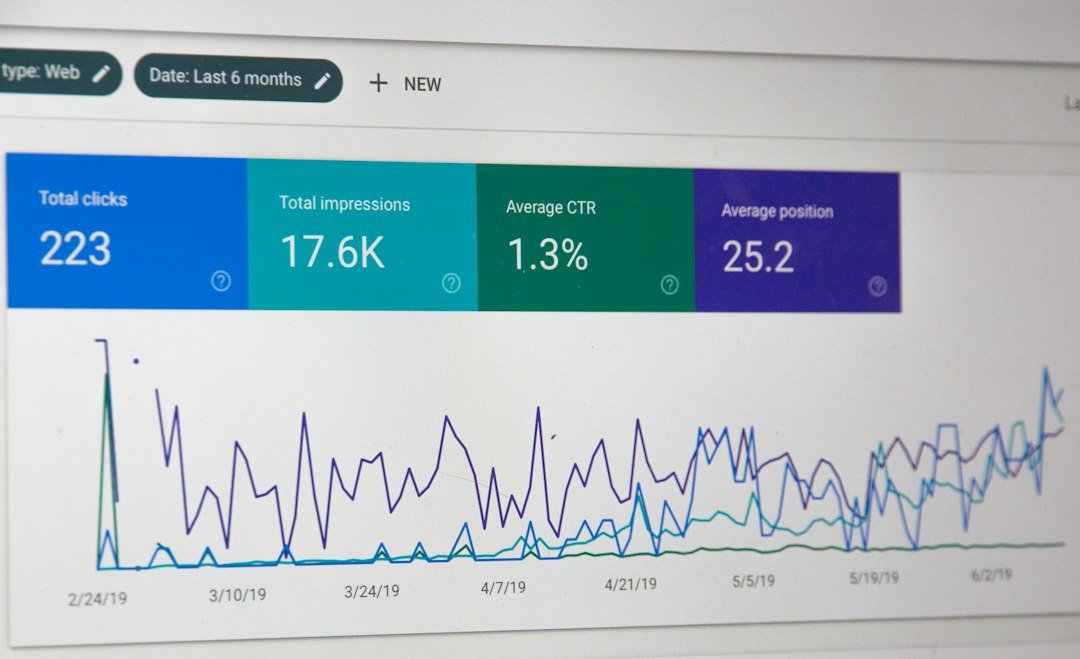
Open your Search Console Performance report. Sort by impressions. The queries where you get impressions but sit at position 12 or lower are your opportunity list. Now search each of those queries in Google and note which competitor ranks in the top 3. That competitor is beating you for terms Google already associates with your site. You already have a foot in the door. Those are the easiest gaps to close.
Tool 2: Google Search Itself (Free)
Manual SERP analysis is underrated because it is unglamorous. Search your five most important keywords. For each one, open the top 3 results and note three things: when was the page last updated (look for visible dates or check the Wayback Machine), how long is the page (word count), and what topics does it cover that your page does not. This takes 10 minutes per keyword and gives you a direct comparison between your page and the pages beating it. No subscription required.
Tool 3: A Free Competitor Analysis Tool (Free Tier)
Several SEO tools offer free tiers with limited competitor data. These free tiers are enough for a small business tracking 2 to 3 competitors. You do not need enterprise-level access to identify the gaps that matter. These free tiers are enough for a small business tracking 2 to 3 competitors. You do not need enterprise-level access to identify the gaps that matter. For a detailed breakdown of which paid tools are worth upgrading to (and which are not), our SEO monitoring tools comparison covers real costs including the labor time most comparisons hide.
Where Most Tracking Tools Miss the Real Threat
Most competitor tracking tools focus on what has already happened. They show you that a competitor gained 5 backlinks last month, or that they now rank position 4 for a keyword you also target. That is useful. It is also reactive. By the time the data shows up in your dashboard, the competitor has already moved. The real threat is not what they did last month. It is what they are publishing this week.
The Publishing Velocity Blind Spot
No competitor tracking tool alerts you when a competitor publishes a new page. You find out 4 to 8 weeks later when that page starts ranking and displacing your content. By then, the page is indexed, has accumulated internal links from their existing content, and is earning impressions. The fix is simple and manual: bookmark your competitor’s blog index page and check it once a week. Count new posts. Read the titles. If they published “AC capacitor replacement cost” and you do not have a page targeting that keyword, you have a gap that will cost you rankings in 6 to 8 weeks if you do not close it now.
The AI Overview Displacement
Competitor tracking tools also miss a growing threat: AI Overviews. When Google generates an AI Overview for one of your target keywords, it absorbs clicks from every ranking position, including position 1. Your competitor might be getting cited in the AI Overview while you rank organically below it and get fewer clicks than position 1 used to deliver. Standard rank tracking shows you at position 3 and calls it stable. It does not show you that the AI Overview above you is eating 30% of the clicks that used to go to the top organic results. For a deeper look at this problem and how to optimize for AI Overviews, see our guide on optimizing content for Google AI Overviews.
The Content Quality Gap You Cannot See in a Dashboard
A dashboard tells you your competitor’s page ranks above yours. It does not tell you why. The “why” is usually content quality: depth, structure, specificity, and how well the page answers the searcher’s actual question. You have to read the page to find this. Open the competitor’s page that outranks yours. Compare it to yours. Is theirs longer? Does it answer the question faster? Does it include a specific answer in the first 60 words? Does it cover subtopics yours does not mention? This comparison takes 5 minutes and produces more actionable insight than any $139/month dashboard ever will.
Build a 15-Minute Weekly Competitor Check
Competitor SEO tracking only works if you actually do it consistently. A 47-page monthly report you read once and forget is worse than no tracking at all, because it creates the illusion of action. Here is a 15-minute weekly workflow that produces one content decision every week. No dashboard subscription required.
Step 1: Check Their Blog (5 Minutes)
Open your top competitor’s blog. Count new posts since last week. Read the titles. Ask: do I have a page covering this topic? If yes, is mine better? If no, should I write one? Write down one topic they covered that you have not. That is your content decision for the week.
Step 2: Compare One SERP (5 Minutes)
Pick one keyword you both compete for. Search it. Note who ranks above whom. Open the top result and your page side by side. Identify one thing their page does that yours does not: a section, a table, an FAQ, a specific answer format. Write it down. That is your update task for the week.
Step 3: Check Your GSC Data (5 Minutes)
Open Google Search Console. Look at queries where you dropped 3 or more positions in the last 28 days. These are pages losing ground. Pick one. Check whether a competitor overtook you. If they did, compare their page to yours. Write down what they added or changed. That is your second content decision for the week.
Over a year, this 15-minute weekly check produces 104 content decisions: 52 new topics to write about and 52 pages to update. That is a content calendar built entirely from competitive intelligence and your own ranking data, not from guesswork or generic keyword lists.
Stop Guessing, Start Seeing

Here is the honest limitation of competitor SEO tracking. It tells you exactly what the gap is. It does not close it. Knowing your competitor published 20 pages in 90 days while you published 3 is valuable. It is also useless if you do not have the production capacity to publish 20 pages in the next 90 days. Tracking reveals the diagnosis. The treatment is content output.
This is where most small business owners hit a wall. You know what to write. You know which keywords to target. You know which pages to refresh. You do not have the time to write 20 posts in a quarter, let alone in a month. At $500 per post from an agency, closing a 17-page gap costs $8,500. At 90 minutes per post writing it yourself, it costs 25 hours you do not have. The tracking data is not the bottleneck. Production is.
This is where automation changes the math. An AI-assisted workflow dramatically reduces the per-post cost compared to agency rates, and compresses review time to minutes per post. The gap that would have cost thousands through an agency can be closed at a fraction of that cost in tool fees and review time. For the full cost breakdown of AI-assisted content production versus agency retainers, our content ROI analysis shows the real per-post math including labor, tool fees, and opportunity cost.
The approval gate is what makes this safe. AI generates the draft from your keyword gap data. You read it, edit for accuracy and brand voice, and click approve. Nothing publishes without your review. Any tool that auto-publishes AI content without a human approval step is a liability, not a feature. The 15 minutes you spend per post is the difference between content that compounds and content that collapses.
Try ClearPost free for 7 days. AI does the heavy lifting, you approve every post before it goes live. No long onboarding, no agency overhead, cancel anytime. See what 30 SEO-optimized posts a month looks like compared to the 4 you are getting now.
Frequently Asked Questions
What is competitor SEO tracking?
Competitor SEO tracking is the process of monitoring what competing websites are doing in search: how many pages they publish, which keywords they rank for, how fast they acquire backlinks, and how often they update existing content. The goal is not to collect data but to identify specific gaps you can close with your own content.
What metrics should I track for competitors?
Track four metrics: new pages published in the last 90 days, backlink velocity (new referring domains per quarter), content refresh cadence (how often they update existing pages), and keyword gaps filtered by difficulty and relevance to your business. Skip vanity metrics like total backlink count, domain authority, and overall visibility scores.
Can I track competitors without paid SEO tools?
Yes. Google Search Console shows which queries you compete for and where you rank. Manual Google searches show who outranks you and what their pages look like. Free tiers from Ahrefs and Ubersuggest give limited but usable competitor backlink and keyword data. A 15-minute weekly check using these free tools is enough for most small businesses.
How often should I check competitor rankings?
Weekly is sufficient. Daily checking creates anxiety without producing better decisions. Pick a day, spend 15 minutes checking your competitor’s blog for new posts, comparing one SERP where you both compete, and reviewing your own GSC data for ranking drops. One content decision per week is the goal.
Does competitor tracking help if I cannot produce enough content to close the gap?
Tracking reveals the gap but does not close it. If your competitor publishes 20 pages per quarter and you publish 3, knowing the gap is only useful if you can increase output. AI-assisted content workflows reduce per-post cost from $500 to under $10 plus 15 minutes of review time, making it feasible to match competitor publishing volume without an agency retainer.