
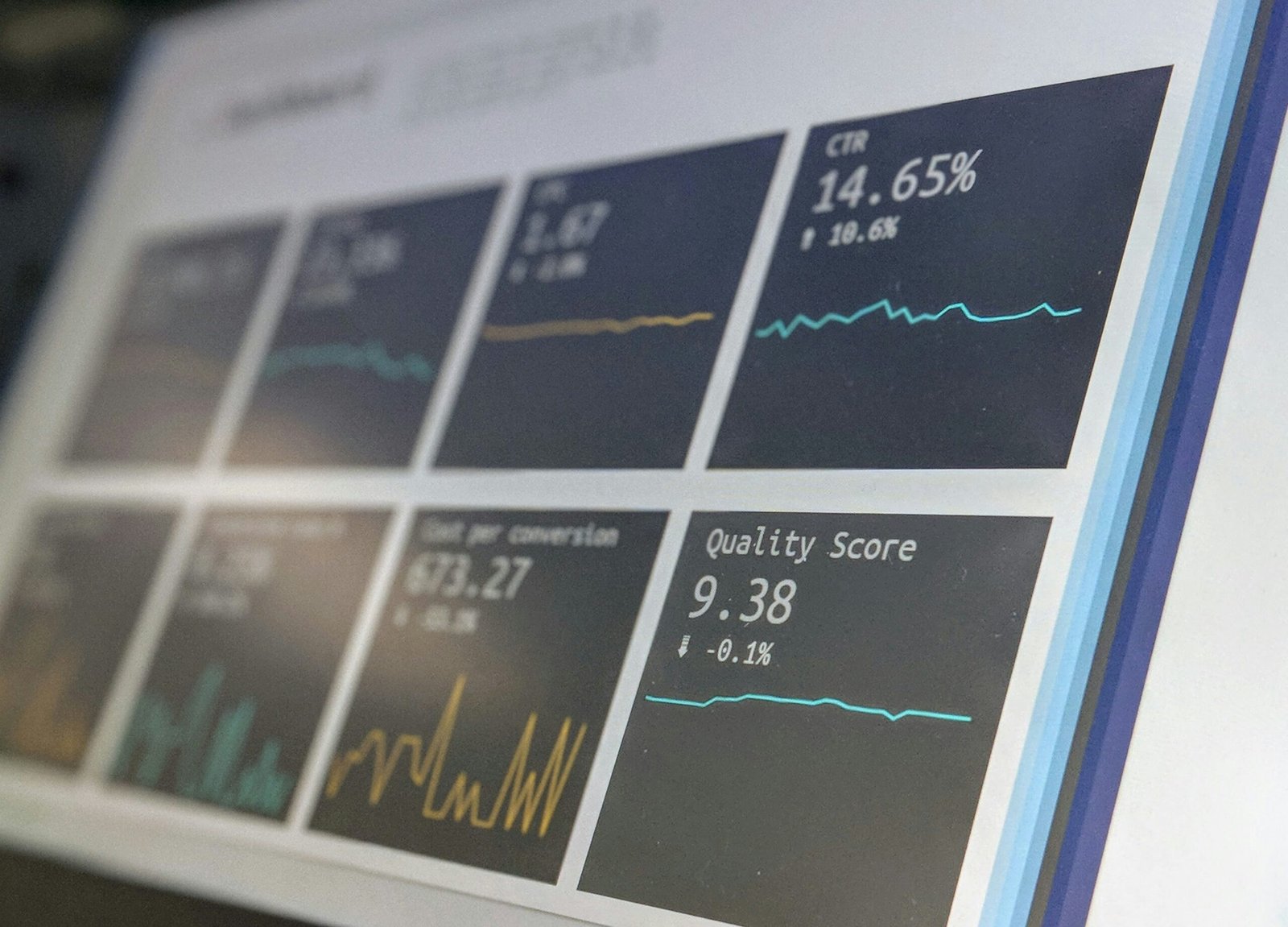
You logged into Google Ads this morning. Your cost per acquisition is $48.72. Six months ago it was $47.91. Your agency’s monthly report says they “implemented AI-driven bid optimization” and “expanded Performance Max coverage.” Your spend went up 18%. Your CPA moved 81 cents. That is the hard dollar question this article answers: does AI advertising mean cheaper ads, or just faster ad spend?
A large and growing majority of paid-search spend from mid-market and small-business accounts ran on automated bidding by the end of 2025, driven by Google’s own product disclosures. Your agency did not choose to adopt AI advertising. The platforms chose for them. Google’s Smart Bidding, Performance Max, and Meta’s Advantage+ campaigns are now the default, not the upgrade. The question is not whether you are using AI in your ad campaigns. You are. The question is whether it is saving you money or just spending it faster with better reporting.
You’re Spending on Ads. Now AI Is Spending Faster
Here is what actually happened to your ad budget over the last six months. Your agency enabled Performance Max or switched your Meta campaigns to Advantage+. The platforms started automatically generating creative variants, testing audiences, and adjusting bids in every auction. Your total spend increased because AI ad tools are designed to find more conversions, and more conversions require more impressions, and more impressions require more budget. The platform’s incentive is to spend your money. Your incentive is to spend less per acquisition. Those are not the same thing.
Google has stated that advertisers adopting AI-powered campaigns can see more conversions or conversion value on Search at a similar ROAS. Note the phrasing: more conversions at a similar ROAS, not a lower cost per acquisition. More volume at the same efficiency means your total spend goes up while your per-unit cost stays flat. That is not a savings story. It is a scaling story dressed up as one.
The 15% conversion lift also comes with an asterisk that Google does not put in the slide deck. Performance Max campaigns cannibalize branded search traffic in the majority of accounts, meaning a chunk of the “new” conversions are people who were already searching for your brand name and would have converted anyway. Your blended ROAS looks better. Your incremental ROAS, the conversions you would not have gotten without the AI campaign, is the number nobody shows you.
This is the core tension of AI advertising in 2026: the platforms optimize for their definition of success (more conversions, more spend, more platform revenue), not yours (lower CPA, higher incremental ROAS, profitable scaling). Understanding that gap is the difference between using AI ad tools effectively and paying an algorithm to burn your budget faster.
What AI Advertising Actually Means in 2026

AI advertising is not a single technology. It is a label covering three separate automation layers that the platforms bundle together: automated bidding, automated creative generation, and automated audience targeting. Each layer has different cost implications, different transparency levels, and different risks. Your agency likely turned all three on at once and reported the aggregate result, which is why you cannot tell what moved the needle and what just moved the spend.
Automated Bidding: Smart Bidding and Advantage+ Budget
Google’s Smart Bidding uses what the platform calls “auction-time bidding” to set bids for each individual auction based on conversion likelihood. Per Google’s own documentation, Smart Bidding “sets precise bids for each and every auction to help drive higher conversion volume or conversion value at a cost efficiency that is comparable to or better than existing performance goals.” That last phrase is doing heavy lifting: “comparable to or better than” means the platform considers flat performance a success.
Meta’s Advantage+ campaigns operate similarly. Budget allocation across ad sets is algorithmic, and the platform automatically determines Advantage+ status when three automation levers are enabled: budget, audience, and placements. Once all three are on, you hand control of where your money goes to Meta’s system. The platform moves budget between ad sets based on its own performance modeling, and does not expose per-auction bid amounts, making it difficult to verify that spending aligns with your stated bid caps or ROAS targets.
Automated Creative Generation
Both Google and Meta now generate ad creative variations automatically. Google’s Performance Max creates text, image, and video assets from your feed and supplied materials. Meta’s Advantage+ Creative applies machine learning transformations to your assets, including AI-written summaries of your selling points, background replacements, and format adaptations. Meta’s help center lists a growing number of creative enhancements, many of which carry its generative AI label.
Here is the critical policy detail: Meta’s updated Commercial Terms, effective October 2026, include a new “AI Features” section stating that “AI features may make mistakes and may not always produce accurate, complete, or suitable results” and that the advertiser is “solely responsible for and assume[s] any and all risks” of those features and any resulting content. Per reporting on the revised terms, this clause applies to features Meta switches on by default, not only features you actively chose. If AI-generated copy introduces a superlative claim that violates Meta’s misleading claims policy, the liability sits with you, not Meta.
Automated Audience Targeting
Meta’s Advantage+ audience replaces manual targeting with algorithmic audience expansion. Google’s Performance Max uses audience signals rather than explicit targeting. In both cases, the platform decides who sees your ads based on its own data and conversion models. For small businesses with limited conversion data (fewer than 30 conversions per month), these systems have insufficient signal to optimize effectively, and manual campaigns with tightly controlled targeting often deliver better ROI.
Where AI Ad Tools Save Money (and Where They Don’t)
AI ad tools genuinely reduce CPA in specific scenarios and genuinely inflate spend in others. The difference is not the tool. It is the conditions under which the tool operates. Here is what the 2026 benchmark data actually shows.
| Scenario | AI Ad Tool Effect | Real CPA Impact (2026 Data) | Who Benefits |
|---|---|---|---|
| Ecommerce on Meta with strong creative and 50+ conversions/month | Advantage+ lowers CPA through automated audience expansion | $28.65 vs $38.19 manual (32% lower, per 2026 CPA benchmarks) | Ecommerce with catalog data |
| Google Performance Max for ecommerce | Blends Shopping, Display, YouTube. Lower CPC but softer intent | $18.51 CPA vs $23.74 Search (22% lower, but attribution requires scrutiny) | Retail with product feed |
| B2B SaaS on Performance Max | Blends in branded and low-intent placements. CPA looks great, lead quality drops | $25 vs $143 Search CPA, but PMax leads blend branded and soft conversions | Nobody. Manual Search outperforms for high-intent B2B |
| Low-volume accounts (under 30 conversions/month) | AI has insufficient data to optimize. Bids become erratic | No reliable benchmark. Performance degrades vs manual | Nobody. Use manual campaigns |
| Creative generation (both platforms) | More variants tested faster. But AI-generated claims create compliance risk | 15-30% performance lift from more creative variants, per industry data. Risk: advertiser carries liability | Accounts with strong base creative and review process |
| Branded search cannibalization | PMax captures branded conversions at higher cost than dedicated brand campaign | Inflated ROAS. Real incremental cost hidden in blended metrics | Google. Not the advertiser |
The pattern is clear: AI ad tools save money when you have strong conversion data, good creative inputs, and a product type that benefits from broad audience expansion. They inflate spend when you have thin data, operate in a high-intent B2B niche, or when the platform’s definition of success (more conversions) diverges from yours (profitable incremental conversions).
The Labor Cost Nobody Quotes: AI Ad Platforms vs. Managed Services
Your agency charges $1,500 to $4,000 per month. They enabled AI bidding and called it optimization. Here is what that actually costs when you add up every layer, including the labor you or your team spend monitoring what the AI is doing with your money.
Layer 1: Ad Spend (The Obvious Cost)
This is the $1,500 to $4,000 per month going to Google and Meta. It is the number you see in your dashboard. It is the number that went up 18% after your agency “implemented AI optimization.” This is 30% to 60% of your total cost, not the whole picture.
Layer 2: Agency Management Fee (The Semi-Obvious Cost)
Most small business ad agencies charge 15% to 30% of ad spend or a flat retainer of $1,000 to $3,000 per month. At $2,500 monthly ad spend with a $1,500 management fee, your effective management cost is 60% on top of ad spend. The agency’s job, increasingly, is configuring and monitoring the same AI tools you could configure yourself. Per 2026 pricing data on AI PPC management, “AI-powered” agencies typically charge $500 to $5,000 per month and often use the same third-party AI tools that you could subscribe to directly for $49 to $299 per month.
Layer 3: Tool Subscriptions (The Hidden Cost)
AI ad management tools, the software layer between you and the platform’s native AI, run $49 to $695 per month, with a typical entry point around $134 per month per research compiling 13 AI ad manager products. Some are spend-tiered (price goes up as your ad budget grows). Some are flat. Your agency may be passing these costs through in their management fee, or absorbing them as part of their workflow. Either way, you are paying for them.
Layer 4: Your Labor (The Cost Nobody Counts)
Here is the number that never appears in your agency’s monthly report: the time you spend reviewing reports you do not understand, emailing the agency to ask why CPA is flat, sitting on calls where someone explains that “the algorithm is still learning,” and checking whether the AI-generated creative that went live actually represents your brand. At $100 per hour for a marketing manager’s time, 4 to 8 hours per month of this oversight labor is $400 to $800 per month. Add it to your agency fee and your true management cost is $1,900 to $3,800 per month on top of ad spend.
The total loaded cost of your AI advertising program at $2,500 monthly ad spend: $2,500 (ad spend) + $1,500 (agency fee) + $134 (tool subscription, buried in agency cost) + $600 (your oversight labor) = $4,734 per month. Your CPA is not just the ad spend divided by conversions. It is the total loaded cost divided by conversions. That is the number your agency never quotes, and it is the number that tells you whether AI advertising is actually working for your business.
5 Questions to Ask Before You Hand Budget to an Algorithm
Before you sign another agency contract, enable another AI campaign type, or increase your budget based on a platform recommendation, ask these five questions. The answers determine whether you are investing in AI advertising or subsidizing it.
1. How many conversions per month does this account generate?
If the answer is fewer than 30, AI bidding does not have enough data to optimize. You are feeding an algorithm noise and hoping it finds a pattern. Switch to manual CPC with tightly controlled keywords and audiences. The AI tools will tell you they need more data, which conveniently means more spend. More spend on a low-volume account does not produce more signal. It produces more spend.
2. What percentage of reported conversions are branded vs. non-branded?
If your agency cannot answer this question, they are reporting platform numbers without analyzing them. Performance Max and Advantage+ campaigns capture branded searches and credit them as campaign conversions. Your branded search cost per lead runs roughly 4x lower than non-branded (per B2B SaaS benchmark data showing $34 brand CPL vs $207 non-brand). If your AI campaign is cannibalizing branded traffic, your reported CPA is artificially low and your real prospecting efficiency is worse than before.
3. Who is liable for the creative the AI generates?
As of October 2026, the answer is you. Meta’s updated Commercial Terms make advertisers “solely responsible” for AI-generated and AI-modified ad content, including features Meta enables by default. Google’s Performance Max generates creative from your assets, and you are responsible for ensuring that generated content complies with Google’s advertising policies. If you are not reviewing every creative variant the platforms produce, you are accepting liability for content you have not seen.
4. What is your true loaded CPA, including agency fees and your time?
Take your total monthly ad spend, add your agency management fee, add your internal oversight hours at $100 per hour, and divide by conversions. That is your real cost per acquisition. If it is higher than your customer lifetime value, you are losing money on every customer the AI acquires. Most agencies report in-platform CPA only, which excludes 40% to 60% of your true cost. Run the full number yourself.
5. Can you pause the AI and run manual campaigns as a control test?
If the answer is no, you have ceded control of your budget to a system you cannot benchmark against. Run a 30-day test with manual campaigns on a portion of your budget. Compare CPA, conversion quality, and ROAS against the AI-managed portion. If the AI does not beat manual by a margin wider than its management cost, the AI is not saving you money. It is saving the agency time.
The Honest Tradeoff: What AI Advertising Still Can’t Do
AI ad tools optimize bids, generate creative variants, and expand audiences at a speed no human media buyer can match. They cannot do four things, and the gap between what they can and cannot do is where your money either compounds or evaporates.
First, AI cannot define what a qualified lead looks like for your business. The platforms optimize for the conversion event you configure. If your conversion event is “form submission,” the AI will find the cheapest form submissions on the internet, including ones from people who have no intent to buy. Garbage in, garbage out, faster.
Second, AI cannot assess creative quality. It can generate 50 variants of your ad copy, but it cannot tell you that variant 23 sounds desperate, variant 41 misrepresents your service, and variant 7 makes a claim your legal team would never approve. Meta’s own terms concede that AI features “may not always produce accurate, complete, or suitable results.” The suitability judgment is yours.
Third, AI cannot distinguish between branded and incremental demand. Performance Max reports a 4.5x ROAS, but if 60% of those conversions are people who searched your brand name and would have converted through your organic listing or a $0.50 branded search campaign, your incremental ROAS is closer to 1.8x. The platform does not care. A conversion is a conversion.
Fourth, AI cannot tell you when to stop spending. The platform’s recommendation engine will always recommend more budget. Google’s own documentation notes that Smart Bidding “continuously updates your bidding algorithms to align with changes in performance.” Translation: the system will spend whatever you give it and report the results as progress. The decision to stop, to cut budget, to pull back from a campaign that is producing low-quality conversions, that is a human decision. No platform will make it for you.
If your paid ads are producing traffic but your organic content is not converting any of it, the problem may not be your ad spend. It may be that your site lacks the content depth that turns clicks into customers. That is where we come in at ClearPost. While your AI ad tools handle the top of the funnel, our AI-assisted content system handles the middle: SEO-optimized blog posts that rank, educate, and convert. AI does the heavy lifting, you approve every post before it goes live. Try ClearPost free for 7 days and see what 30 SEO-optimized posts a month looks like compared to the 4 you are getting now.
Frequently Asked Questions
Does AI advertising actually reduce cost per acquisition for small businesses?
In most cases, no. More than 80% of paid-search spend from small and mid-size accounts already runs on automated bidding. Your agency did not choose to adopt AI; the platforms made it the default. The question is whether the AI is lowering your true loaded CPA or just spending your budget faster with better-looking reports.
How do I calculate the real cost of my AI advertising program?
Take your total monthly ad spend, add your agency management fee, add 4 to 8 hours of your oversight time at $100 per hour, add any tool subscriptions, and divide by conversions. That is your real CPA. Most agencies report only in-platform CPA, which excludes 40% to 60% of your true cost.
When should I use manual campaigns instead of AI bidding?
If your account generates fewer than 30 conversions per month, AI bidding lacks sufficient data to optimize. Manual campaigns with tightly controlled keywords and audiences typically deliver better ROI. The AI tools will ask for more budget to get more data, but more spend on a low-volume account produces more spend, not more signal.
Am I liable for ad creative that AI platforms generate automatically?
Yes. Meta’s updated Commercial Terms, effective October 2026, state that advertisers are ‘solely responsible’ for any content AI features create or modify, including features Meta enables by default. Google’s Performance Max generates creative from your assets, and you must ensure it complies with advertising policies. Review every creative variant the platforms produce.
How do I know if my AI ad campaign is cannibalizing branded search traffic?
Check the branded vs. non-branded conversion split. Performance Max and Advantage+ campaigns frequently capture branded searches and credit them as campaign conversions, inflating reported ROAS. If your agency cannot tell you what percentage of conversions are branded, they are reporting platform numbers without analyzing them.