

You Googled your own business. You are on page two of the map pack. The three companies above you have fewer reviews, worse websites, and one of them has a misspelled phone number on their Google Business Profile. You are losing jobs you should be winning, and you do not know why.</n
This is the local SEO playbook for a small business owner who serves a geographic area. No agency pitch. No $3,500/month retainer required. Just the pieces that actually move your map pack position in 2026, in the order to do them, with the weekly time each one costs.
The Seven Pieces of a Local SEO Strategy
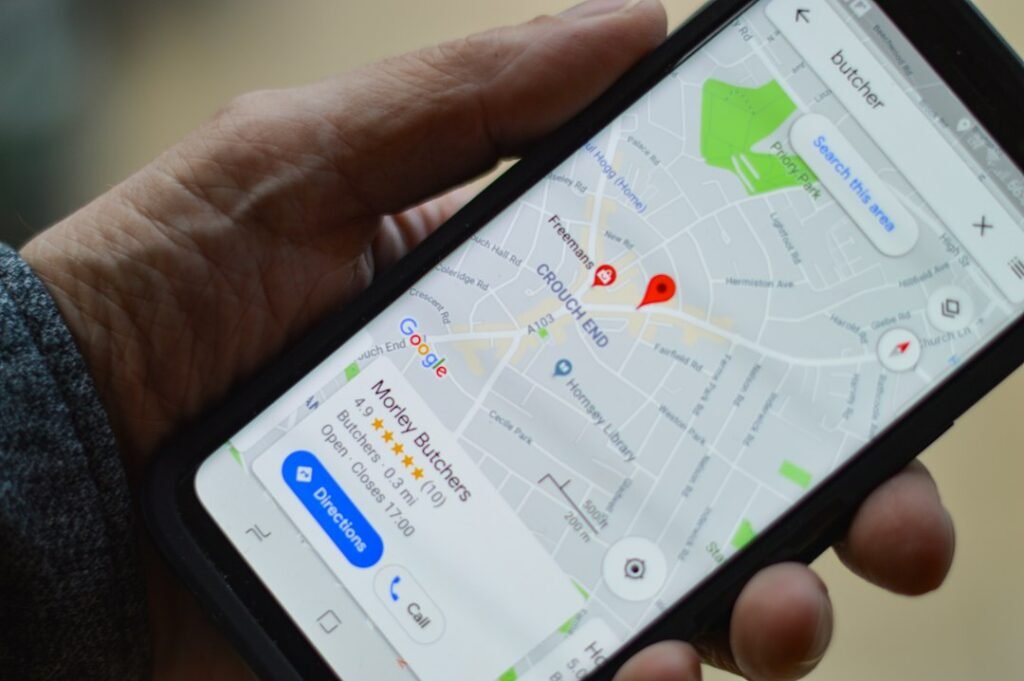
Local SEO is not one thing. It is seven separate workstreams that compound when they are all present and stall when any one is missing. Most small businesses do three of them poorly and skip the rest. Here is what each piece does, why it matters, and what it costs in your time.
1. Google Business Profile Setup and Ongoing Posts
Your Google Business Profile is the single highest-leverage asset in local SEO. It is what Google displays in the map pack, in Knowledge Panel results, and on Google Maps. If you do nothing else on this list, claim and complete your profile.
The setup: claim your profile at google.com/business, verify by postcard or video, and fill every field. Business name, address, phone, hours, services, service area boundaries, photos, and a 750-character description that leads with your primary service and city. Choose your primary category carefully. The category you select carries more ranking weight than any other single field. A plumber categorized as “Plumber” instead of “Emergency Plumber” will not rank for emergency searches, regardless of content quality.
The ongoing part: GBP posts expire after seven days. A profile that has not had a new post in three weeks signals to Google that the business is less active than a competitor posting weekly. One GBP post per week is the minimum. Each post should include a photo, a short service description, a call to action (Call Now, Book Online), and a link to the relevant page on your website.
Weekly time cost: 20 minutes per post if you write it yourself. Two minutes if you are reviewing AI-drafted posts.
2. Service Area Pages on Your Website
If you serve five cities but only have one website page, you are invisible in four of them. Service area pages are individual pages on your site targeting each city or neighborhood you serve. They tell Google and searchers that you operate in that specific location.
Each page needs: a location-specific H1 (“HVAC Repair in Round Rock, TX”), an opening paragraph referencing the neighborhood or nearby landmarks, the specific services you offer there, driving distance from your nearest office, a localized FAQ section, an embedded Google Map, and LocalBusiness schema with accurate NAP data. The content must be genuinely different from page to page. Swapping the city name in a template is the pattern Google’s quality raters are trained to flag as thin content.
The mistake most small businesses make: writing two or three pages, running out of time, and leaving the rest unfinished. A half-built set of service area pages is worse than none at all because it signals inconsistency. If you serve 10 cities, you need 10 pages, and they all need to be live within a 60-day window.
This is where AI-assisted content earns its keep. Each page takes 90 to 120 minutes to write manually. With an AI-assisted workflow, the generation takes minutes and your review time is 15 minutes per page. For 10 pages, that is 15 to 20 hours of manual writing versus 2.5 hours of review. For a deeper look at how that math works across multiple locations, our local SEO automation cost breakdown walks through the numbers.
3. Local Citations and NAP Consistency
Your NAP (Name, Address, Phone) must match everywhere it appears on the internet. Google cross-references your GBP data against Yelp, Bing, Apple Maps, Yellow Pages, and dozens of other directories. If your GBP says “123 Main St” and Yelp says “123 Main Street,” Google sees a mismatch. Enough mismatches and your local ranking signals degrade.
The work: list your business on the core aggregators and major directories. Start with Bing Places for Business, Apple Maps Connect, Yelp for Business, and Facebook. Then work through industry-specific directories (Healthgrades for dental, Avvo for legal, Angi for home services). Use a citation tool like BrightLocal or Whitespark to find and fix inconsistencies across 40 to 70 directories. This is a one-time project with quarterly maintenance checks.
Weekly time cost: zero after the initial build. Quarterly audit: 30 minutes.
4. Review Flow: Getting and Responding to Reviews

Review velocity is a prominence signal. Google’s local ranking documentation names reviews alongside links as key prominence factors. A business that gains three new reviews per month will outrank a business with the same total but no recent activity. The total matters, but recency matters more.
The getting part is human work. Ask every customer for a review. Send a follow-up text or email 24 hours after service with a direct link to your GBP review page. Train your technicians to mention it at the end of the job. No AI tool can replace this. What customers say in their reviews is authentic content that no machine can generate.
The responding part is where AI helps. Responding to every review, positive and negative, builds trust signals and shows prospective customers that you are active. A good response references the specific service and thanks the reviewer by name. AI can draft these responses in seconds from the review content, and you spend 30 seconds reading and posting instead of 3 minutes composing from scratch. Across 40 to 120 reviews per month, that saves 2 to 6 hours.
5. On-Page Signals: NAP, Schema, and Embedded Maps
Your website needs to reinforce what your Google Business Profile says. This means three things on every service area page and your homepage.
First, your NAP must appear in text format (not just an image) in the footer or a contact block on every page. It must match your GBP exactly. Second, LocalBusiness schema markup must be present in your page source. Schema tells Google your business name, address, phone, geo-coordinates, hours, and service area in structured data it can parse directly. If you use a WordPress SEO plugin, most can generate this automatically from your business settings. If you are generating pages with AI assistance, the schema should be generated alongside the content. Validate it with Google’s Rich Results Test before publishing.
Third, embed a Google Map on each service area page. This is a one-click iframe embed from Google Maps, centered on the city or neighborhood the page targets. It reinforces the geographic association between your business and that location.
6. Local Link Building
Links from other local websites tell Google your business is known and trusted in your community. This is the hardest piece to automate and the one where human relationships matter most.
The highest-value local links come from: the Chamber of Commerce, local business associations, community event sponsorships, local news outlets covering your business, and partnerships with complementary local businesses (a plumber linking to an electrician, a dentist linking to an orthodontist). Each of these requires outreach: a phone call, an email, sometimes an in-person meeting. AI cannot build these relationships. It can draft an outreach email, but the follow-up and the relationship are human work.
Start with your Chamber of Commerce membership and local business directory listings. These are the easiest links to acquire and carry genuine local authority. Then look for local blogs and community sites that accept guest posts. One local link from a community site is worth more than 10 links from generic national directories.
7. Tracking Map Pack Position by City
You cannot improve what you do not measure. Map pack position is the metric that matters for local SEO, not organic rank. The map pack is the three businesses Google shows above organic results for a local search. Position 1 in the map pack drives significantly more calls than position 4, which is the top of organic results.
Track your position for your top 5 to 15 keywords across each city you serve. A tool like Local Falcon, BrightLocal, or Whitespark can track map pack positions geographically, showing you where you rank for searches originating from different points in your service area. This matters because your map pack position can change based on where the searcher is located. You might rank #1 for “HVAC repair” in downtown Austin but #5 for the same search in Round Rock.
Check your positions every 30 days. Look for movement, not absolute rank. If you are climbing from #7 to #5 in one city, your work is working. If you are flat across all cities after 90 days of consistent effort, one of the seven pieces above is missing or under-resourced.
Where AI-Assisted Content Fits (and Where It Does Not)
AI-assisted content is a production tool, not a strategy. It collapses the time between idea and published page, but it does not replace the judgment, relationships, and authenticity that make local SEO work. Here is the honest split.
| Task | AI-Assisted? | Why |
|---|---|---|
| Service area pages | Yes | Structured, repetitive format with variable local data. AI generates unique content per city in minutes. You review and approve. |
| FAQ sections | Yes | FAQs follow a predictable question-answer format. AI drafts from your service data. You verify accuracy and add local specifics. |
| Review responses | Yes | Responses follow a pattern: acknowledge, thank, address specifics. AI drafts in seconds. You review and post. |
| GBP weekly posts | Yes | Short, service-focused, link-driven. AI generates from your service data. You review and publish. |
| Owner quotes and first-hand experience | No | Only you can describe what happened on a specific job, why you recommend a specific approach, or what a customer said. This is the content Google’s E-E-A-T framework rewards most. |
| Photos and job site images | No | Real photos of your work, your team, and your location are authenticity signals no AI can generate. Take them on your phone and upload them. |
| Local link outreach | No | AI can draft an email, but building a relationship with the Chamber of Commerce director or a local blogger requires a phone call and a handshake. |
The line is simple: AI assists where the content is structured and repetitive. It stops where authenticity, relationships, or physical presence are the point. For a fuller breakdown of what AI can and cannot do for local SEO content, our local SEO automation analysis covers the honest limitations.
The 90-Day Order of Operations

Most local SEO plans fail because they try to do everything at once and run out of gas by week three. This plan sequences the work so each phase builds on the last. Follow it in order. Do not skip ahead.
Days 1 to 30: Foundation
This month is about claiming your assets, fixing the basics, and building the content infrastructure. Everything in months two and three depends on this being done right.
| Week | Task | Time Cost |
|---|---|---|
| Week 1 | Claim and fully complete Google Business Profile. Choose primary category. Add 10 photos. Write 750-char description. | 2 hours |
| Week 2 | Audit NAP across website, GBP, and top 5 directories. Fix mismatches. Start citation build on Bing, Apple Maps, Yelp, Facebook. | 3 hours |
| Week 3 | Publish first 3 service area pages. Add LocalBusiness schema, embedded map, and NAP to each page. | 4 hours (or 1 hour with AI-assisted drafting) |
| Week 4 | Publish next 3 service area pages. Publish first GBP weekly post. Set up review request template (email or text with direct GBP link). | 3 hours (or 1 hour with AI) |
Month 1 total: 12 hours manual, or roughly 4 hours with AI-assisted content for the service area pages and GBP posts.
Days 31 to 60: Content Build and Review Flow
With your foundation in place, this month is about publishing the rest of your service area pages, getting your review flow running, and starting to build local links. The content production volume goes up, and this is where AI assistance saves the most time.
| Week | Task | Time Cost |
|---|---|---|
| Week 5 | Publish remaining service area pages (target: all cities live). Add FAQ sections to each page. | 3 hours (or 45 min with AI) |
| Week 6 | Start weekly GBP post cadence. Send review requests to last 30 days of customers. Respond to all existing reviews. | 2 hours (or 30 min with AI-drafted responses) |
| Week 7 | Join Chamber of Commerce. Submit to local business directory. Draft local link outreach email (AI can draft, you personalize and send). | 2 hours |
| Week 8 | Publish 2 to 3 localized blog posts targeting service-area keywords. Continue GBP posts and review requests. | 3 hours (or 1 hour with AI) |
Month 2 total: 10 hours manual, or roughly 3 hours with AI-assisted content for pages, posts, and review responses.
Days 61 to 90: Momentum and Measurement
By month three, your content infrastructure is live and your review flow is running. Now you measure, adjust, and push on local links. This is also when you will see the first signs of map pack movement if everything is in place.
| Week | Task | Time Cost |
|---|---|---|
| Week 9 | Set up map pack tracking by city (Local Falcon, BrightLocal, or Whitespark). Record baseline positions for top 10 keywords. | 2 hours |
| Week 10 | Continue GBP posts, review requests, and review responses. Publish 2 to 3 localized blog posts. Reach out to 2 local businesses for link partnerships. | 3 hours (or 1.5 hours with AI) |
| Week 11 | Run citation audit. Fix any NAP inconsistencies that have appeared. Update GBP photos (add 3 to 5 new job-site photos). | 1.5 hours |
| Week 12 | Check map pack positions vs. Week 9 baseline. Identify cities where you are moving and cities where you are stuck. Double down on content and reviews for stuck cities. | 1 hour |
Month 3 total: 7.5 hours manual, or roughly 4.5 hours with AI-assisted content and review responses.
90-Day Total Time Summary
| Month | Manual Time | With AI-Assisted Content |
|---|---|---|
| Month 1 (Foundation) | 12 hours | 4 hours |
| Month 2 (Content Build) | 10 hours | 3 hours |
| Month 3 (Momentum) | 7.5 hours | 4.5 hours |
| Total | 29.5 hours | 11.5 hours |
Roughly 30 hours over 90 days, or about 2.5 hours per week. With AI-assisted content handling the service area pages, FAQs, GBP posts, and review responses, you cut that to about 11.5 hours, or under one hour per week. The pieces that remain manual are the pieces that should be: owner quotes, photos, outreach, and relationship building.
What to Expect and When
Local SEO is not fast. If anyone promises page-one map pack rankings in under six months, they are selling, not planning. Here is the realistic timeline for a small business starting from a claimed but unoptimized Google Business Profile and a basic website.
Days 1 to 30: You will see no movement. Your GBP is being re-indexed. Your service area pages are being crawled. This is the infrastructure phase, and infrastructure is invisible.
Days 31 to 60: You may see small map pack movement in your immediate vicinity (within 1 to 2 miles of your business address). Your review flow is starting to register. GBP posts are keeping your profile active. You might gain 2 to 4 positions for your primary keyword in your closest city.
Days 61 to 90: First measurable movement across multiple cities. Service area pages that have been live for 45 to 60 days start generating impressions in Search Console. Review velocity is building. You should see 3 to 5 position improvement for secondary keywords in 2 to 3 cities.
Months 4 to 6: The compounding phase. Map pack positions stabilize for your primary keywords. New service area pages start ranking from the content authority you built in months 1 to 3. This is where consistent review flow and weekly GBP posts pay off. For a fuller breakdown of what agency-level local SEO actually costs per deliverable, our local SEO services cost analysis breaks down every line item.
Scaling the Content Side
The content layer is where most small businesses stall. Writing 10 service area pages, 30 localized blog posts, weekly GBP posts, and review responses across 90 days is 15 to 20 hours of writing if you do it manually. That is why most owners quit at month two. The off-page work, GBP management, reviews, citations, and local links, is manageable. The content volume is what breaks the plan.
This is the gap we built ClearPost to close. ClearPost handles the content production layer inside WordPress: service area pages with LocalBusiness schema, localized blog posts targeting your service-area keywords, FAQ sections, and GBP-ready post drafts. You approve every piece before it goes live. The off-page work, the human work, stays yours. The content production, the part that stalls most owners, is what we automate.
Try ClearPost free for 7 days. AI does the heavy lifting on service area pages, blog posts, FAQs, and review responses. You review and approve before anything publishes. No long onboarding, no agency overhead, cancel anytime. See what 30 SEO-optimized local posts a month looks like compared to the 4 you would produce manually.
Frequently Asked Questions
How long does local SEO take to show results?
Realistic local SEO timelines show first map pack movement at 60 to 90 days, meaningful position gains at 4 to 6 months, and stable rankings at 6 to 9 months. Anyone promising page-one results in under six months is selling, not planning.
Can I do local SEO myself without an agency?
Yes. The seven pieces in this playbook are executable by a business owner in roughly 2.5 hours per week over 90 days. The off-page work (GBP, citations, reviews, local links) requires human hands regardless of whether you hire an agency. The content production layer is where AI-assisted tools save the most time.
What is the most important local SEO ranking factor?
Google Business Profile optimization is the highest-leverage factor. Your primary category selection, profile completeness, and posting cadence carry more weight than any single on-page or link factor. If you only do one thing, fully optimize your GBP.
Where does AI content fit in local SEO?
AI-assisted content fits structured, repetitive tasks: service area pages, FAQ sections, GBP weekly posts, and review responses. It does not fit where authenticity is the point: owner quotes, job-site photos, local relationship building, and first-hand experience content. Every AI-generated piece should pass through a human approval gate before publishing.
How often should I post on my Google Business Profile?
At least once per week. GBP posts expire after seven days, so a profile without fresh posts signals inactivity. One weekly post with a photo, service description, and call to action is the minimum cadence. Two to three per week is better if you can sustain it.