

You signed the retainer six months ago. You have a dedicated “account manager.” You’re paying $4,000–$6,000 a month. And your WordPress blog still has eight dusty drafts sitting in it, the last published post is six weeks old, and your organic traffic graph looks like a slowly deflating balloon. Sound familiar?
You’re not alone — and you’re not wrong to question whether the model is broken. The good news: a growing number of small business owners and lean marketing teams are ditching the traditional agency hamster wheel by using an AI content writer for WordPress that handles research, structure, and first drafts — while keeping a human editor firmly in control of quality and brand voice.
This article breaks down exactly what that looks like, what it costs, where AI genuinely helps (and where it doesn’t), and how to decide which approach is right for your situation.
The Real Problem With Content Agencies (It’s Not Always Quality)
To be clear: content agencies aren’t bad. Many do excellent work. But the traditional agency engagement model has structural problems that hit small businesses particularly hard — problems that have nothing to do with the individual writers or strategists involved.
The Cost Reality
Content marketing agency costs can run anywhere from $2,500 to $10,000 or more per month, depending on goals, timeline, and scope. For a small business watching every dollar, that’s a significant commitment — often before a single post has driven a single lead. A $3,500 to $5,000 monthly budget for a content marketing agency can go a long way — but it’s still significantly more expensive than adding it to your own payroll costs.
And that’s just the retainer. When you factor in the coordination overhead — briefing calls, revision rounds, approval cycles — your lean team is spending hours per week on content that still takes weeks to land in your CMS.
The Turnaround Problem
For most articles, the turnaround time from start to publication is about a week or two — including outlines, three to four rounds of revisions, interviews, research, and creation of corresponding illustrations. That’s the fast end. For full-service agencies juggling multiple client accounts, timelines stretch further. If you need a content calendar with four posts a month, you’re managing a small production pipeline — from your side as well as theirs.
The result: drafts pile up in your editor and never get finished, publishing cadence becomes inconsistent, and your SEO momentum stalls every time the workflow hits a snag.
The Generic Content Problem
Hiring freelancers helps you avoid paying workers a full salary with benefits, but it can make your overall content strategy disjointed, and the quality of the final product can be a gamble. Agency content often has the same issue at a higher price point: writers working across dozens of clients rarely have the depth of knowledge to replicate your brand’s voice or capture the nuances of your industry.
That’s not a failure of effort — it’s a structural limitation. A writer billing 2 hours per post cannot absorb months of institutional knowledge about your customers, your competitors, and what makes your product different.
What the Numbers Actually Say About Content Marketing ROI
Before we talk about AI as an alternative, let’s establish why content marketing is worth investing in at all. Because it absolutely is — the question is just how to invest in it without burning your budget.
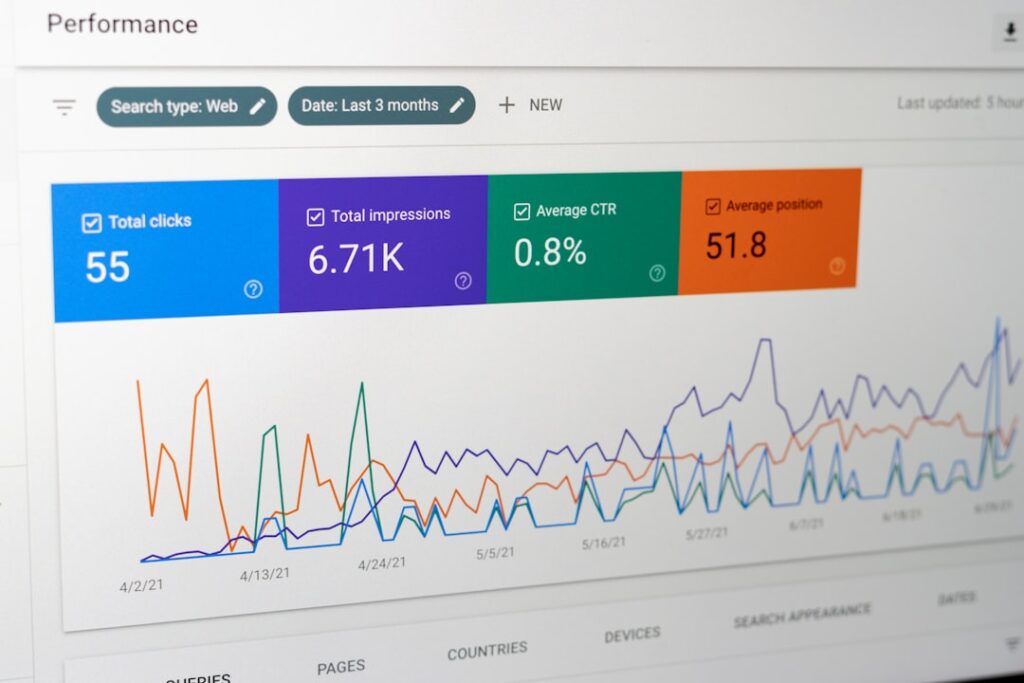
The average ROI for content marketing is $7.65 per $1 spent, and companies using blogs generate 55% more website traffic and 67% more leads compared to non-blogging peers. For small businesses specifically, small businesses are 23% more likely than average to see ROI from blog posts.
Publishing frequency compounds those results: brands producing content weekly saw a 3.5x increase in conversions versus monthly publishers. That’s the core tension: you need volume and consistency to win at organic search, but the traditional agency model makes both expensive and slow.
Content marketing costs 62% less than traditional marketing while generating 3x more leads. But only if you can actually publish content regularly — which brings us to what AI changes.
How an AI Content Writer for WordPress Actually Changes the Equation

AI content tools don’t replace your brand voice, your subject matter expertise, or your editorial judgment. What they do is eliminate the parts of content production that consume most of your time without requiring any of those things: research aggregation, structural outlining, first-draft generation, and on-page SEO formatting.
Think of it this way: AI handles the heavy lifting on research, structure, and first drafts — with you (or your editor) adding brand voice, original insights, and final approval. You approve every post before it goes live. No surprises.
The adoption numbers reflect how quickly this has shifted from experiment to standard practice. Two years ago, 65% of marketers weren’t using AI for blog creation. Now that figure is down to 5%, with somewhere between 81% and 87% of marketers now using AI-powered tools for content tasks.
What AI Does Well in a WordPress Content Workflow
The main benefits of using AI content writing tools are greater efficiency, broader idea generation, and easier research — because these tools are automated, they can generate content based on much more information than a human can process in the same amount of time.
Specifically, a well-configured AI content writer for WordPress can handle:
- Keyword-optimized outlines: Pulling SERP data to build post structures that match search intent before a word is written
- Full first drafts: Generating 1,000–2,000 word drafts from a brief in minutes, not days
- Meta descriptions and title tags: Formatting SEO elements consistently across every post
- Internal link suggestions: Identifying opportunities to connect new content to your existing WordPress pages
- Publishing directly to WordPress: Pushing formatted drafts straight to your Gutenberg editor without manual copy-paste
AI-generated content can rank well on Google, especially when it’s high-quality, provides value to the reader, and is optimized for SEO. Many AI tools are designed to help with keyword integration, readability, and other on-page SEO factors. However, Google’s guidelines emphasize helpful, reliable, people-first content, so human oversight and editing are crucial to ensure the AI-generated text meets these standards.
What AI Cannot Do (Be Honest About This)
AI can’t replicate your subject matter expertise. It can’t write the case study that references your actual client results. It can’t capture a founder’s voice or industry-specific opinion that comes from 15 years in a niche. And it can occasionally generate plausible-sounding information that’s simply wrong — what’s called “hallucination.”
A full 97% of organizations that use AI-generated content edit or review it before publishing, and only 4% post AI output as-is. 80% of marketers who use AI manually review the generated content to check for accuracy.
That human review step is non-negotiable. It’s also fast — editing a well-structured AI draft typically takes 30–60 minutes, compared to briefing a freelancer, waiting 5–10 days, then doing revision rounds that consume a similar amount of your time anyway.
If you’re experiencing the painful gap between the content you need and what you’re currently publishing, our team at ClearPost can help — with a system built specifically for WordPress sites that want to scale content without scaling headcount.
Cost Comparison: Agency vs. Freelancer vs. AI-Assisted Workflow

Here’s what different content approaches actually cost for a small business publishing 4 blog posts per month on WordPress. These ranges are based on publicly available market data.
| Approach | Monthly Cost (Est.) | Posts/Month | Avg. Turnaround | Brand Voice Control |
|---|---|---|---|---|
| Full-service content agency | $3,500–$10,000 | 4–8 | 7–14 days/post | Low–Medium |
| Freelance writers (retainer) | $1,500–$3,000 | 4–6 | 5–10 days/post | Medium (varies by writer) |
| In-house content manager | $5,000–$7,000 (salary + tools) | 6–10 | 3–5 days/post | High |
| AI-assisted (tool + editor review) | $100–$500 (tools) + editor time | 8–16 | 1–2 days/post | High (you control edits) |
The cost difference is dramatic. AI content platforms can generate drafts at a fraction of human costs, with plans ranging from $29 to $500 monthly — potentially cutting production expenses by 30–50%. But the bigger unlock isn’t just cost reduction; it’s the ability to publish more consistently without adding headcount or managing a roster of freelancers.
To be fair: if you’re a $10M+ business in a highly regulated or deeply technical industry (law, medicine, financial services), a specialist agency relationship may still deliver better ROI than AI-assisted production. The table above is most relevant for small businesses and SMBs where content budgets are under $5,000/month.
The Hidden Cost of Inconsistency
There’s a cost that rarely shows up in any agency proposal: the cost of publishing inconsistently. Results from content marketing typically emerge in stages — initial traffic increases within the first three to six months, lead generation around six to twelve months, and significant revenue impact after one to two years. If you stop and start because your agency is slow or your freelancer goes dark, you reset that clock.
An AI-assisted workflow with a stable editorial process doesn’t have sick days, capacity ceilings, or competing client priorities. That consistency compounds.
How to Set Up an AI Content Writer Workflow in WordPress
Setting up a working AI content system for your WordPress site is a four-step process. It takes a few hours to configure correctly, but once it’s running, the ongoing time investment drops dramatically.
Step 1: Define Your Content Brief Template
AI tools produce significantly better output when given structured input. Before running any prompt, document your standard brief format: target keyword, search intent, target audience, word count, key points to cover, competitor posts to differentiate from, and any proprietary data or quotes to include. This brief template becomes reusable for every post.
Step 2: Choose a Tool With Native WordPress Integration
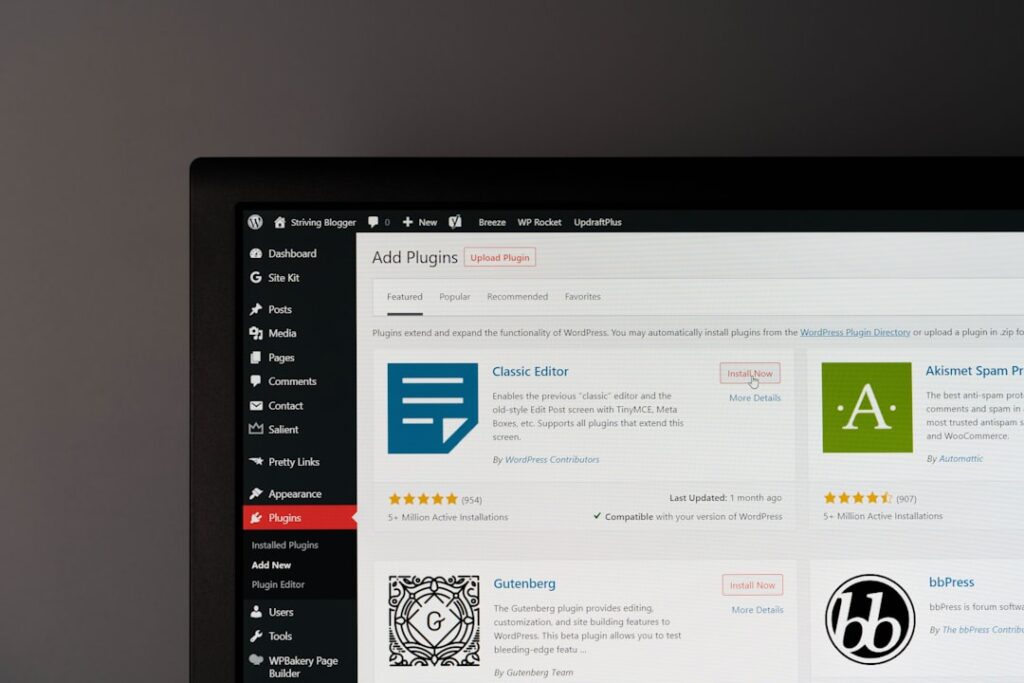
The biggest workflow friction point in AI content production is copying and reformatting content between tools. Look for tools that publish directly to WordPress. Some tools are embedded directly into the WordPress editor, letting you engage with AI as if you were chatting with a colleague — and generate diverse content on command, reducing the time and effort you spend on content creation.
For SEO-focused workflows, tools that combine AI writing with real-time SERP analysis are particularly valuable. These tools help content creators optimize AI-generated drafts by analyzing key on-page factors and providing structure recommendations that align with search engine best practices — suggesting ideal word count, headings, and keyword usage based on top-performing pages.
Step 3: Build an Editorial Review Checklist
Your review process should take 30–45 minutes per post and cover: factual accuracy (especially any statistics or specific claims), brand voice calibration (adjust any phrases that don’t sound like you), unique value additions (insert proprietary insights, client examples, or original opinions), and SEO confirmation (title tag, meta description, internal links, and image alt text). This is where your expertise makes the difference — and it’s also where the post goes from generic to genuinely useful.
Step 4: Establish a Publishing Cadence You Can Actually Maintain
Frequency matters more than perfection. Two well-edited, AI-assisted posts per week will outperform one agency-polished post per month in terms of indexing velocity, topical authority, and organic traffic growth. Start with what’s sustainable — even once per week — and scale from there as your workflow matures.
Key Takeaways
If you’ve been staring at a bloated agency invoice wondering when the traffic is going to show up, here’s the honest summary:
- Agency costs are real and high: A content marketing agency costs anywhere from $2,500 to $10,000 per month — often for output levels that a well-configured AI workflow can match at a fraction of the price.
- Consistency beats perfection: Brands producing content weekly saw a 3.5x increase in conversions versus monthly publishers. The best content strategy is the one you can actually execute.
- AI is a force multiplier, not a replacement: AI content generators are best seen as powerful assistants rather than replacements for human writers — human creativity, critical thinking, and the ability to add a unique voice and emotional depth remain indispensable for truly compelling content.
- Human review is non-negotiable: Every AI-generated post should go through an editorial pass before it’s published. You approve everything. That’s your quality control — and it protects your brand.
- The ROI case for content is strong: Website/blog/SEO remains the #1 ROI-generating marketing channel — but only if you’re actually publishing with enough frequency to build topical authority.
Next Steps: What to Do This Week
If you’re currently paying an agency $3,000–$8,000 a month for content and not seeing the traffic results you expected, the first practical step is a content audit: how many posts are live, how many are getting traffic, and what’s the publishing frequency over the last 6 months? That data will tell you whether the issue is quality, quantity, or both.
If the answer is “not enough posts and too slow to publish,” that’s an AI content workflow problem — and it’s fixable without blowing your budget or firing your agency entirely. Many businesses run a hybrid: AI-assisted production for volume-driving SEO content, agency or specialist writers for high-stakes cornerstone pieces and thought leadership.
At ClearPost, we’ve built exactly this kind of system — a WordPress-native content automation tool that generates SEO-optimized drafts, handles internal linking, and pushes ready-to-review posts directly into your WordPress editor. You stay in control of every publish decision, and you stop waiting weeks for content that should take days.
Ready to see what a sustainable, AI-assisted content workflow looks like for your WordPress site? Get started with ClearPost free for 7 days — no commitment, no agency retainer, and no posts go live without your approval.
Frequently Asked Questions
Can AI-generated content rank on Google?
Yes, AI-generated content can rank well on Google when it is high-quality, provides genuine value to the reader, and is properly optimized for SEO. Google’s guidelines focus on helpful, reliable, people-first content — so human review and editing before publishing is essential to meet that standard.
How much does an AI content writer for WordPress cost compared to an agency?
AI content writing tools for WordPress typically range from $29 to $500 per month, compared to $2,500 to $10,000 per month for a full-service content marketing agency. The trade-off is that AI tools require an internal editor to review drafts before publishing — but that review process typically takes 30 to 60 minutes per post.
Do I still need a human editor if I use an AI content writer?
Yes. Around 97% of organizations that use AI-generated content edit or review it before publishing. AI handles research aggregation, structure, and first drafts efficiently, but human editors are needed to verify factual accuracy, inject brand voice, add subject matter expertise, and make the final publish decision.
How long does it take to see results from AI-assisted WordPress content?
Content marketing results emerge in stages: initial traffic increases typically appear within 3 to 6 months, meaningful lead generation around 6 to 12 months, and significant revenue impact after 12 to 24 months. The advantage of AI-assisted workflows is that they let you publish more consistently, which accelerates the compounding effect of organic search rankings.
What should I look for in an AI content writer plugin for WordPress?
Look for native WordPress integration (so content goes directly into your editor without copy-pasting), SEO guidance built into the drafting process (keyword suggestions, meta descriptions, title tags), internal link recommendations based on your existing content, and a clear human review step before anything is published. Tools that combine AI writing with real-time SERP data tend to produce better-optimized drafts.