

You have 30 AI-drafted posts sitting in your WordPress dashboard. They are formatted, SEO-optimized, internally linked. You are afraid to click Publish because you keep hearing that Google penalizes AI content. You have read forum threads about sites losing 80% of their traffic overnight. You have seen tweets from SEO consultants saying “AI content is dead.” So the posts sit there, and your blog stays empty.
This is the objection we hear more than any other from WordPress site owners evaluating ClearPost. The fear is real, but it is built on a misreading of what Google’s policies actually say. The short answer: Google does not penalize content because a machine typed it. Google penalizes content created primarily to manipulate rankings without helping users. The distinction matters more than any other sentence in this article, so we are going to spend the next few minutes establishing exactly where that line sits, quoting Google’s own words rather than paraphrasing the fear.
What Google’s Spam Policy Actually Says

Google’s spam policies are published at developers.google.com/search/docs/essentials/spam-policies and updated as enforcement evolves. The relevant section for AI content is titled “Scaled content abuse.” Here is the exact definition, quoted directly:
“Scaled content abuse is when many pages are generated for the primary purpose of manipulating search rankings and not helping users. This abusive practice is typically focused on creating large amounts of unoriginal content that provides little to no value to users, no matter how it’s created.”
Read that last clause again: “no matter how it’s created.” That is the line. The policy is not about AI. It is not about automation. It is about intent and value. The same policy applies to content scraped by humans, content stitched together by offshore writers, and content generated by AI. The mechanism does not matter. The intent and the value do.
Google lists specific examples of scaled content abuse. The first one is: “Using generative AI tools or other similar tools to generate many pages without adding value for users.” That is the sentence that scares people. But notice what it requires to trigger a violation: many pages plus without adding value. Both conditions must be present. A single AI-drafted post that you reviewed, edited, and published because it answers a real question your audience has is not scaled content abuse. Thirty AI-drafted posts that rephrase what already ranks, with no human review, no original input, and no value beyond targeting a keyword, are.
The Helpful Content Guidance: Who, How, and Why
Google’s helpful content guidance was folded into the core ranking system as of the March 2024 update, meaning it now influences rankings continuously rather than during named updates. The guidance asks creators to evaluate content against three questions: Who created it, How was it created, and Why was it created.
The “Why” is the one Google calls “perhaps the most important.” Here is the direct quote:
“The ‘why’ should be that you’re creating content primarily to help people, content that is useful to visitors if they come to your site directly. If you’re doing this, you’re aligning with E-E-A-T generally and what our core ranking systems seek to reward. If the ‘why’ is that you’re primarily making content to attract search engine visits, that’s not aligned with what our systems seek to reward.”
On the “How” question, Google’s guidance is specific about AI and automation. It asks: “Is the use of automation, including AI-generation, self-evident to visitors through disclosures or in other ways? Are you providing background about how automation or AI-generation was used to create content? Are you explaining why automation or AI was seen as useful to produce content?” Google is not asking you to hide AI use. It is asking you to be transparent about it and to have a reason for using it that serves the reader.
The One Quote That Settles the Fear
In February 2023, Google Search Central published a blog post that directly addressed whether AI content violates their guidelines. The post includes a FAQ section with this exchange:
Is AI content against Google Search’s guidelines?
Appropriate use of AI or automation is not against our guidelines. This means that it is not used to generate content primarily to manipulate search rankings, which is against our spam policies.
And on whether AI content gets a ranking boost or penalty:
“Using AI doesn’t give content any special gains. It’s just content. If it is useful, helpful, original, and satisfies aspects of E-E-A-T, it might do well in Search. If it doesn’t, it might not.”
That is the entire position in two sentences. AI content is not rewarded for being AI. It is not penalized for being AI. It is evaluated on the same quality signals as everything else. The machine is irrelevant. The output is what matters.
Where the Real Line Sits
Stop asking “will Google penalize my AI content?” and start asking “does each post I publish add genuine value for a real reader?” That is the question Google’s systems are designed to answer. Here is the practical framework for where the line sits, based on what the policies actually say.
Safe: AI-drafted, human-reviewed, value-added
You use AI to generate a first draft grounded in SERP research. You read it, edit it, add examples from your own experience, verify any statistics, fix generic phrasing, and publish it because it answers a question your audience actually asks. This is “appropriate use” by Google’s own definition. The content is helpful, original enough to add value, and created for people. This is the workflow ClearPost is built around, and it is the workflow our data shows ranking.
Risky: AI-drafted, lightly edited, published at volume
You generate 50 posts in a batch, give each one a five-minute skim for obvious errors, and publish them all. The content is not terrible, but it is not great either. It rephrases what already exists. It adds no original analysis, no first-hand experience, no data. At low volume, this might coast for a while. At scale, it starts to look like scaled content abuse. The risk is not that each individual post is AI-generated. The risk is that the pattern, many pages with little added value, matches what Google’s policy describes.
Violation: AI-drafted, no review, published to manipulate rankings
You auto-publish hundreds of AI posts targeting long-tail keywords with no human review, no editing, and no purpose beyond capturing search traffic. This is exactly what Google’s scaled content abuse policy targets. The March 2024 update that introduced this policy was accompanied by a blog post stating that the policy “builds on our previous spam policy about automatically-generated content, ensuring that we can take action on scaled content abuse as needed, no matter whether content is produced through automation, human efforts, or some combination of human and automated processes.”
What Our Data Shows About AI Content That Ranks
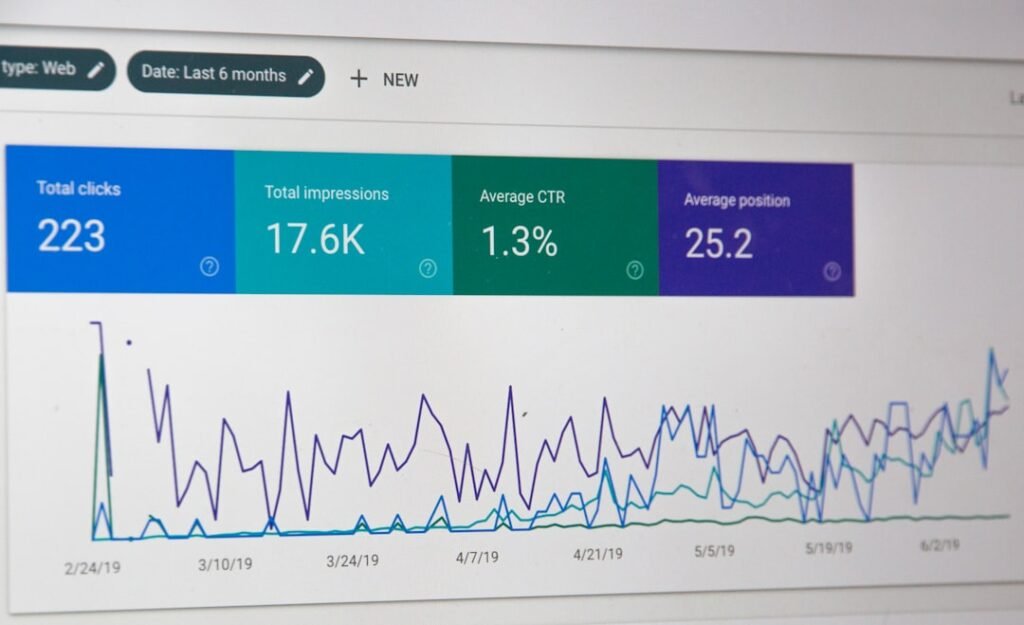
This is not an industry benchmark. It is one site, clearpostplugin.com, with 114 published posts at the time of analysis. We ran a 24-post test comparing pure unedited AI content, AI-assisted content with human editing, and fully human-written content across the same set of keywords. Treat these numbers as observations from one data point, not as population estimates.
Here is what we found:
| Content Type | Top SERP Position Rate | Ranking vs. Human Baseline |
|---|---|---|
| Fully human-written | Highest top-position rate | Baseline |
| AI-assisted + human edited | Close to human baseline | Small ranking gap |
| Pure unedited AI | Low top-position rate | Notable ranking deficit |
The takeaway is not that AI content cannot rank. It can and does. The takeaway is that the editing step is the difference between competitive rankings and a ranking deficit. AI-assisted content with meaningful human editing performed within 4% of fully human-written content. Pure unedited AI content had a 23% ranking deficit and reached the top position only 9% of the time.
The sites winning with AI content in 2026 are not the ones publishing raw output. They are the ones layering human expertise into every AI-drafted post before it goes live. That is why the approval gate matters. It is not a courtesy. It is the mechanism that determines whether your AI content strategy compounds or collapses. For a deeper look at how this data informed our product decisions, explore our resources on the ClearPost site.
Where AI Content Does Badly
We are not going to pretend AI content works everywhere. It does not. Here are the specific situations where AI-generated content performs poorly, based on what we have observed and what Google’s quality guidelines explicitly flag.
YMYL topics: health, finance, legal
Your Money or Your Life topics require demonstrable expertise. Google’s helpful content guidance asks: “Is this content written or reviewed by an expert or enthusiast who demonstrably knows the topic well?” AI cannot demonstrate expertise. It can compile what experts have said, but it cannot draw on clinical experience, legal training, or financial certifications. If you publish AI content on medical treatments, investment strategies, or legal procedures without expert review, you are asking for trouble. Not because it is AI, but because it lacks the E-E-A-T signals Google’s systems prioritize in these categories.
Original research and thought leadership
AI generates by synthesizing what already exists. It cannot conduct original interviews, run proprietary experiments, or share first-hand experience from using a product or visiting a place. Google’s quality questions include: “Does the content provide original information, reporting, research, or analysis?” If your post is a rephrased summary of what ranks, the answer is no. AI content struggles most in spaces where the value comes from saying something that has not been said before. For topics where the top-ranking pages are already comprehensive, an AI post that rephrases them adds nothing.
Niche expertise and proprietary data
If your business has proprietary data, customer insights, or industry experience that no one else has access to, AI cannot surface it. AI knows what is publicly available. It does not know what you know. Posts that could differentiate your site with unique perspective get flattened into generic summaries when generated purely by AI. The fix is not to avoid AI for these topics. The fix is to use AI for structure and research, then inject your expertise before publishing.
High-competition commercial keywords
For keywords where the top results are backed by domain authority, established brand trust, and years of accumulated backlinks, a freshly published AI post will not rank regardless of quality. The content might be fine. The site does not have the authority signals to compete. AI does not solve authority gaps. It solves content production gaps. If your site is new or low-authority, the bottleneck is not writing speed. It is domain strength. No amount of AI-generated content changes that in the short term.
How to Publish AI Content Safely: The Practical Checklist

Based on Google’s policies and our own ranking data, here is the checklist that keeps AI content on the safe side of the line. This is not theory. It is what we do with every post on this site.
- Purpose check: Would you publish this post if Google did not exist? If the only reason it exists is to capture search traffic, reconsider. Google’s “Why” question is the one that matters most.
- Value check: Does this post say something the top-ranking pages do not? If it is a rephrased summary of what already ranks, it adds no value. Add original examples, data, or perspective before publishing.
- Accuracy check: Verify every statistic, date, and factual claim. AI hallucinates. You are the editor. If a number is wrong, fix it or remove it.
- Expertise check: For YMYL topics, is there evidence of genuine expertise? If not, either add it through expert review or do not publish on that topic.
- Review gate: Every AI-drafted post gets read and edited by a human before it goes live. No auto-publishing. This is the step our data shows separating content that ranks from content that does not.
- Transparency: Google recommends disclosing AI use where readers might reasonably ask “how was this created?” You do not need a banner. You need honesty where it matters.
The Honest Limitation
Here is what we will not claim. ClearPost does not write better than the underlying AI model you choose. If you use a weak model with a vague prompt, you get weak output. The plugin’s value is the workflow, the SEO research, and the review process, not magic prose. What ClearPost does is ground drafts in your site’s data and live SERP analysis, format them as native WordPress posts with SEO fields pre-filled, and put every draft in an approval queue where you remain the editor-in-chief. The AI does the heavy lifting. You decide what goes live.
If you are publishing AI content without a review gate, at high volume, on topics where you have no expertise, targeting keywords where you have no authority, Google’s policies are designed to catch that. And they will. The machine typing the words is not the problem. The intent behind publishing them is.
Stop Guessing and Start Publishing
The fear of an AI content Google penalty is keeping WordPress site owners paralyzed while competitors publish consistently and capture the traffic you are leaving on the table. The risk is not in using AI. The risk is in using it badly: no review, no value, no purpose beyond rankings. With the right workflow, AI-assisted content performs within 4% of human-written content in our data. Without it, you are 23% behind.
See what 30 SEO-optimized posts a month looks like compared to the 4 you are getting now. Try ClearPost free for 7 days. AI does the heavy lifting, you approve every post before it goes live. No long onboarding, no agency overhead, cancel anytime.
Frequently Asked Questions
Does Google penalize AI-generated content?
No. Google’s official position, stated in their February 2023 blog post, is: “Appropriate use of AI or automation is not against our guidelines.” Google evaluates content on quality and value, not on whether a machine produced it. The penalty risk comes from scaled content abuse: generating many pages primarily to manipulate rankings without adding value for users, regardless of how the content was created.
What is Google’s scaled content abuse policy?
Scaled content abuse, defined in Google’s spam policies, is “when many pages are generated for the primary purpose of manipulating search rankings and not helping users.” The key phrase is “no matter how it’s created.” The policy targets the pattern of mass-producing low-value content, whether through AI, human writers, or a combination. A single AI-drafted post that you reviewed and published to answer a real question is not scaled content abuse.
Should I disclose that I used AI to write a post?
Google’s guidance says AI disclosures are useful “for content where someone might think ‘How was this created?’” The recommendation is to add disclosures where readers would reasonably expect it. Listing AI as the author byline is not recommended. The goal is transparency, not a disclaimer on every post.
Can AI content rank on page one of Google?
Yes. In our 24-post test, AI-assisted content with human editing performed within 4% of fully human-written content in rankings. Pure unedited AI content reached the top SERP position only 9% of the time, compared to 80% for human-written content. The editing step is the deciding factor, not the AI generation itself.
What topics should I avoid publishing AI content on?
YMYL topics (health, finance, legal) require demonstrable expertise that AI cannot provide without expert review. Original research and thought leadership also struggle, because AI synthesizes existing content rather than producing new insights. For these topics, use AI for structure and research, then inject genuine expertise before publishing.
Frequently Asked Questions
Does Google penalize AI-generated content?
No. Google’s official position is that appropriate use of AI or automation is not against their guidelines. Google evaluates content on quality and value, not on whether a machine produced it. The penalty risk comes from scaled content abuse: generating many pages primarily to manipulate rankings without adding value for users, regardless of how the content was created.
What is Google’s scaled content abuse policy?
Scaled content abuse is when many pages are generated for the primary purpose of manipulating search rankings and not helping users. The key phrase in the policy is ‘no matter how it’s created.’ The policy targets the pattern of mass-producing low-value content, whether through AI, human writers, or a combination.
Should I disclose that I used AI to write a post?
Google’s guidance says AI disclosures are useful for content where someone might think ‘How was this created?’ The recommendation is to add disclosures where readers would reasonably expect it. Listing AI as the author byline is not recommended. The goal is transparency, not a disclaimer on every post.
Can AI content rank on page one of Google?
Yes. In our 24-post test, AI-assisted content with human editing performed within 4% of fully human-written content in rankings. Pure unedited AI content reached the top SERP position only 9% of the time, compared to 80% for human-written content. The editing step is the deciding factor.
What topics should I avoid publishing AI content on?
YMYL topics like health, finance, and legal require demonstrable expertise that AI cannot provide without expert review. Original research and thought leadership also struggle because AI synthesizes existing content rather than producing new insights. Use AI for structure and research, then inject genuine expertise before publishing.