

You signed the retainer. You waited six months. Your Analytics barely moved. And now the “long-tail keywords” you were promised are getting answered directly inside ChatGPT, Perplexity, and Google AI Overviews before anyone clicks your site.
The fix isn’t to chase thousands of tiny keyword variations. It’s to publish pages that answer the exact natural-language questions people ask, in the order they ask them, with enough clarity that an AI system can safely quote, cite, or summarize you.
Why your old long-tail strategy isn’t working in AI search
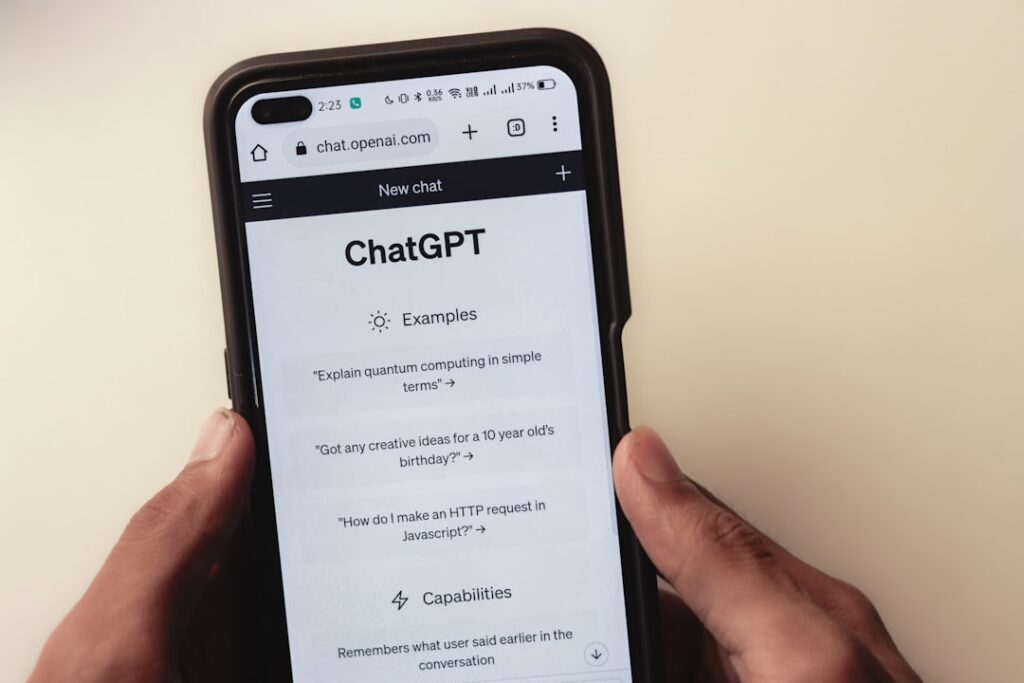
Classic long-tail SEO assumed a simple path: keyword → ranking → click → conversion. AI search breaks that loop. Users ask a full question, get a synthesized answer, then only click if they need proof, depth, or a next step.
That means “ranking” is no longer the only win condition. Your content needs to be selection-worthy as a source: easy to extract, easy to verify, and obviously relevant to the question being asked.
Google describes AI Overviews as a way to help people quickly understand information “from a range of sources,” with links for digging deeper. If your page doesn’t provide a clean, direct answer, it’s harder for the system to use it. Google Search Help: AI Overviews
How AI search changed keyword targeting (and what still works)
AI search didn’t kill SEO fundamentals. It changed what “good targeting” looks like. You still need crawlable pages, clear topical relevance, and content that genuinely helps. But the unit of targeting is shifting from “a phrase” to “a question + context + follow-up intent.”
What still works from classic SEO: publishing people-first content, building topical depth over time, and structuring pages so a system can quickly identify what the page is about. Google’s guidance is still centered on helpful, reliable, people-first content. Google Search Central: Creating helpful, reliable, people-first content
What changed: the “best” long-tail page is often the one that resolves ambiguity. AI systems reward pages that define terms, state assumptions, and give a direct answer that can survive being summarized without losing meaning.
The new long-tail framework: conversational queries vs. traditional keywords
In AI search, long-tail is less about low-volume phrases and more about high-intent conversations. People ask for comparisons, constraints, step-by-step plans, and “what should I do in my situation” guidance. Your content strategy should map to those conversational patterns.
| Traditional long-tail keyword targeting | Conversational AI query targeting | What to publish on WordPress |
|---|---|---|
| Targets a phrase | Targets a full question with context | H2/H3 written as real questions, answered immediately in the first paragraph under each heading |
| Optimizes for clicks from blue links | Optimizes for inclusion in synthesized answers, then clicks for depth | Answer-first sections plus “next step” details (checklists, decision criteria, examples) |
| Relies on exact-match and close variants | Relies on semantic matching across many phrasings | Use 3–6 “people also ask”-style variations naturally in headings and FAQs (without stuffing) |
| One page per micro-keyword | One strong page per problem space | Consolidate thin posts into one authoritative hub with clear subsections and internal anchors |
| Intro paragraphs can be long and fluffy | Needs a quotable, unambiguous answer quickly | Lead with a direct definition, recommendation, or step list before elaborating |
| “SEO content” tone is tolerated | “Expert clarity” tone performs better | Add constraints, edge cases, and first-hand workflow notes that only practitioners know |
5 tactics to adapt your long-tail strategy for ChatGPT and Perplexity

You don’t need a brand-new content machine. You need a tighter one: fewer pages, better structure, and stronger editorial choices. The goal is to make every post “extractable” as an answer while still being useful to a human reader who clicks through.
1) Start with question clusters, not keyword lists
Pick one problem your buyer has, then collect the 8–15 questions they ask before they purchase. Include “how,” “which,” “is it worth it,” “what if,” and “vs” questions. Those clusters are your new long-tail.
Quick win: open a doc and write the questions your customers email you. If a human asks it repeatedly, an AI user will ask it too—just in a longer sentence.
2) Answer first, then prove it
AI systems prefer pages that don’t bury the lede. Give the direct answer in 40–60 words, then expand with steps, examples, and pitfalls. This also reduces pogo-sticking when a human does click through.
3) Write for follow-up questions (because AI search encourages them)
AI Overviews and chat-style engines are designed to help people ask follow-ups. So your post should anticipate them: add “If you’re in X situation…” subsections, decision points, and constraints (budget, timeline, skill level, tools).
Google positions AI search experiences around helping users dig deeper and ask follow-up questions. Google: AI in Search
4) Make your WordPress pages easier to extract and cite
Most “AI optimization” advice is really just good information architecture. Use descriptive H2s, short paragraphs, and specific subheadings. Add a summary box near the top and a checklist near the bottom. If your key point is trapped in a giant wall of text, it won’t travel well into AI answers.
5) Measure visibility differently: citations, not just rankings
In Perplexity, citations are part of the product experience, so being referenced can drive real referral traffic and brand trust. In ChatGPT, links and sources can appear depending on the experience being used (and the user may still not click). Don’t judge success only by “position 3” anymore—track branded search lift, assisted conversions, and referral traffic from AI surfaces.
OpenAI describes ChatGPT search as providing answers with links to relevant web sources. OpenAI Help Center: ChatGPT Search
If you’re experiencing these symptoms, our team at ClearPost can help. We’ll map your best-performing topics into question clusters, restructure your existing posts for answer-first readability, and set up a WordPress workflow your team can sustain.
Real example: how one small business pivoted their content calendar

Here’s a pattern we see work for service businesses and B2B SaaS alike: instead of publishing 12 separate posts for 12 keyword variants, they publish 3 “conversation hub” posts that each cover a full decision in one place.
Example pivot (simplified): a local IT services firm stopped targeting scattered phrases like “managed IT pricing,” “MSP cost per user,” and “IT support monthly fee.” They replaced them with one page that answers the full set of questions a buyer asks: pricing models, what’s included, contract terms, common add-ons, and a plain-English checklist for comparing providers. That single page became the one they send prospects, sales uses in follow-ups, and AI answers can quote without losing context.
The big idea: you’re no longer writing “a blog post.” You’re writing the best answer on the internet for a specific buying conversation.
Where human judgment still beats AI (and always will)

AI can draft, rephrase, and summarize. It can’t decide what’s true for your business, what’s safe to claim, or what your customers actually mean when they ask a vague question. Human judgment is still the difference between content that sounds right and content that is right.
Keep humans in the loop for: choosing the right stance (what you recommend and why), adding first-hand constraints (what fails in practice), reviewing legal/industry compliance language, and selecting examples that match your actual customers. This is also how you avoid “generic AI mush” that no one trusts.
Common mistakes when optimizing for AI search
The fastest way to waste time is to treat AI search as a new set of hacks. The fundamentals are still clarity, usefulness, and credibility—just applied to a new interface.
Mistakes we see most often: publishing dozens of thin posts for tiny variants, writing intros that delay the answer, using vague claims without defining terms, “optimizing” by stuffing questions without actually answering them, and letting AI generate content without a real editorial reviewer.
One more honest tradeoff: when an AI Overview answers the question directly, you may get fewer clicks even if you’re cited. The win becomes brand visibility, trust, and downstream demand—not just sessions.
Frequently asked questions
Below are the most common questions we hear when teams shift from classic long-tail SEO to a long-tail keyword strategy for AI search.
Start ranking in AI search results
If you want help turning your existing WordPress content into answer-first pages that hold up in ChatGPT, Perplexity, and Google AI Overviews, start with a low-risk trial. At ClearPost, we handle the heavy lifting, but you approve every post before it goes live—no surprises. Start a 7-day free trial with ClearPost (cancel anytime, zero commitment, setup in minutes).
Contact ClearPost today to schedule a consultation. We’ll review your current long-tail plan, identify which pages to consolidate, and give you a WordPress publishing workflow your lean team can actually sustain.
Frequently Asked Questions
Do long-tail keywords still matter for SEO in 2026?
Yes, but the goal has shifted from ranking for many tiny variations to answering real questions clearly enough that search engines (and AI summaries) can extract the best answer from your page.
How do I write for ChatGPT and Perplexity without keyword stuffing?
Use natural-language question headings and answer them directly in the first 40–60 words of the section. Then add proof, steps, examples, and constraints. The variety comes from the questions, not repeated phrases.
What should I change first on my WordPress site for AI search visibility?
Consolidate thin posts into stronger pages, rewrite headings into real questions, add answer-first summaries, and make sections easy to scan with short paragraphs and clear subheadings.
Will AI Overviews reduce my organic traffic even if I’m cited?
It can. AI summaries may satisfy the query without a click. The upside is that being cited can increase brand visibility and trust, and can still drive clicks for deeper research and next steps.
Where is human expertise still required in AI-driven SEO?
Humans are essential for choosing the right stance and recommendations, adding first-hand insights and constraints, ensuring accuracy and compliance, and reviewing drafts so the content reflects your real business.
Install ClearPost free on WordPress.org. Set up in 2 minutes, approve every post before it goes live.