

You typed “SEO near me” into Google. The first three results are directories. The next five are lead-gen sites that collect your contact info and resell it to whichever agency pays the most for the lead. Buried somewhere on page two is an actual local SEO provider, and you have no way to tell the difference. That “SEO near me” search is not showing you the best local SEO companies in your area. It is showing you who is best at ranking for that phrase, which is a completely different skill from actually doing SEO for a local business.
Why You Searched “SEO Near Me” (And What You’re Really Looking For)
You do not want an SEO provider near you. You want your business to show up when someone in your service area searches for what you do. That is the actual goal, and it has almost nothing to do with where your SEO company sits on a map.
Here is what happens when you click through those “SEO near me” results. Many of the top-ranking pages are lead-generation directories built specifically to rank for local service queries. They are designed by companies that build niche directory sites, rank them for “[service] near me,” capture the inbound leads, and then sell those leads to agencies or resell templated SEO packages. The entire pipeline exists to turn your search into someone else’s sales call. For a deeper look at how this ecosystem works and why choosing the right provider matters more than proximity, our guide to choosing the best SEO company for small businesses walks through the evaluation framework.
When you do reach a real agency, the pitch usually sounds the same: a monthly retainer between $500 and $2,500, a promise of map-pack rankings, and a deliverable list that reads like a software feature page. “Ongoing optimization.” “Monthly reporting.” “Local citation management.” These phrases tell you nothing about how many posts they will write, how many Google Business Profile updates they will do, or what your actual cost per deliverable looks like. For a full breakdown of what those tiers actually deliver, our local SEO cost-per-deliverable analysis shows exactly where the money goes at each price point.
The question you are really asking is simpler than any of these proposals make it sound: how do I get my business to show up when local customers search for my service? The answer has four parts, and only one of them requires an agency.
What Local SEO Actually Requires in 2026
Local SEO in 2026 comes down to four pillars: Google Business Profile optimization, localized website content, citation consistency, and review signals. Everything else, including most of what agencies list in their proposals, is either a subset of these four or padded overhead.
1. Google Business Profile: The Biggest Single Factor

According to the 2026 Local Search Ranking Factors survey, Google Business Profile (GBP) signals account for 32% of local pack and Maps ranking weight. The next biggest factor, review signals, sits at 20%. On-page signals account for 15%, citations for 6%.
What this means: your GBP listing is the single highest-impact lever in local SEO. Primary category selection, proximity to the searcher, physical address matching the city of search, accurate business hours, review volume and recency, and photo quality all feed directly into whether you appear in the map pack. Google’s own guidance confirms this: local results are driven by relevance, distance, and prominence, with no way to pay for better placement.
This is work you can do yourself in an afternoon. Claim your profile, pick the most specific primary category, fill out every field, add real photos, set accurate hours, and publish a Google Post at least twice a month. An agency charging you $1,200 a month for “GBP management” is spending roughly 30 minutes on this and calling it a deliverable.
2. Localized Website Content: Where Most Retainers Get Padded
Your website needs content that signals geographic relevance. That means service pages mentioning your city and service area, blog posts answering the specific questions your local customers ask, and internal linking that builds topical authority around your core services.
A dental practice needs posts about specific procedures, insurance questions, and recovery timelines localized to their area. An HVAC company needs content about seasonal maintenance, emergency repairs, and equipment sizing for the local climate. A law firm needs posts about local court procedures, consultation FAQs, and specific legal scenarios. A plumbing company needs content about common repairs, seasonal prep, and emergency situations in their service area.
None of this requires $875 per post. It requires consistent, SEO-structured, locally targeted content published on a cadence Google can rely on. This is the layer where agency retainers are most padded and where AI-assisted content tools like ClearPost close the gap. For a full per-post cost breakdown across production models, our real cost per post comparison walks through the numbers dollar for dollar.
3. Citations: NAP Consistency Across Directories
Your business name, address, and phone number (NAP) need to match across Yelp, Bing, Apple Maps, and other directories. Inconsistent citations confuse Google’s entity resolution, which weakens your local ranking signals.
Citation building is genuinely manual work. Most directories do not have APIs for automated submission. This is one area where a specialist or a dedicated citation service adds real value. You can handle the core listings yourself (Google, Bing, Yelp, Apple Maps) in a few hours, but scaling to 40+ directories is where a citation service earns its fee.
4. Reviews: Volume, Recency, and Responses
Review signals account for 20% of local pack ranking weight in 2026, and that weight has been increasing. The factors that matter: total review count, average rating (4 to 5 stars), review recency (fresh reviews matter more than old ones), sustained review velocity (steady flow beats bursts), and whether you respond to reviews.
No agency can generate real reviews for you. What they can do is set up a review request system (a simple email or SMS follow-up after service) and respond to reviews on your behalf. You can set up the request system yourself using your existing customer pipeline in under an hour. Review response takes 5 minutes per review and requires your brand voice, not a templated agency reply.
Local SEO Services vs. Doing It Yourself: A Real Cost Breakdown

The real comparison is not “agency vs. DIY.” It is “full-service retainer” vs. “hybrid: handle GBP and reviews yourself, use a tool for content, hire a freelancer for citations.” The hybrid approach costs 60 to 80% less for the same deliverables.
Here is the math at 8 posts per month, the typical volume a local service business needs to build topical authority. The table includes hidden costs most pricing pages never show: onboarding fees amortized over 6 months, your management time at $100 per hour, and manual publishing labor.
| Cost Layer | Agency ($1,500/mo) | Freelancer ($200/post) | DIY + AI Tool (ClearPost) |
|---|---|---|---|
| Base monthly cost | $1,500 | $1,600 | Contact for plans |
| Posts per month | 4 | 8 | 20 to 30 |
| Per-post cost (base) | $375 | $200 | $3 to $15 |
| GBP management | ~30 min/mo (theirs) | Not included | You handle (1 hr/mo) |
| Citation building | Often outsourced | Not included | Freelancer or citation service |
| Review management | Templated responses | Not included | You handle (5 min/review) |
| Onboarding (amortized 6mo) | $100 to $300/mo | $0 | $0 |
| Your management time (per post) | 10 min ($17) | 45 min ($75) | 15 min ($25) |
| Publishing labor (per post) | Included | 30 min ($50) | 0 (automated) |
| Real per-post cost | $400 to $550 | $325 | $28 to $40 |
| Monthly total (8 posts) | $3,200 to $4,400 | $2,600 | $224 to $320 |
| 12-month total | $38,400 to $52,800 | $31,200 | $2,688 to $3,840 |
Read that table carefully. The agency column assumes 4 posts at the retainer price, but to match 8 posts you would need to double the retainer or accept half the volume. The freelancer column includes the management time and publishing labor that most freelance quotes skip. The AI tool column includes your review time, because the 15 minutes you spend approving each post is the only manual step left.
The 12-month total is the number that should make you pause: $38,400 versus $2,688 for the same 8 posts per month. The difference is not quality. It is overhead. For more on how publishing cadence compounds into traffic, our guide on blog post volume and organic traffic breaks down the timeline.
How to Evaluate a Local SEO Provider Without Getting Burned
If you decide to hire help, evaluate providers against these five checks. A provider who fails two or more is not worth the retainer, regardless of price.
Check 1: Demand a Deliverable List in Writing
“Ongoing optimization” is not a scope of work. A real proposal lists exactly how many GBP posts, how many blog posts, how many citation sources, what review activities, and what reporting cadence you get each month. If the provider will not commit to specific deliverables in writing, they plan to bill you for effort, not output.
Check 2: Ask What Percentage Goes to Reporting
Rank tracking is a $29/month software feature. A monthly PDF with chart positions and traffic graphs is not a deliverable; it is a receipt. If more than 20% of your retainer goes to reporting, you are subsidizing the provider’s internal tools, not your search visibility.
Check 3: Calculate Cost Per Content Asset
At $1,500 per month for 3 blog posts plus GBP management, your cost per content asset is roughly $400. A competent freelancer charges $150 to $300 per post. An AI-assisted workflow with an approval gate costs $3 to $15 per post. If your provider’s content volume does not match the price, ask what the remaining budget buys. If the answer is “strategy and reporting,” you are paying senior prices for planning and junior prices for execution.
Check 4: Verify They Lead With GBP, Not Backlinks
If the proposal leads with “content marketing” and “backlink building” but never mentions Google Business Profile optimization, review generation, or citation management, the provider is selling you generic SEO and calling it local. Local SEO without GBP management is not local SEO. It is standard SEO with a local keyword sprinkled in.
Check 5: Insist on a 90-Day Exit Clause
A 12-month contract with no early termination clause is not a commitment to results; it is a commitment to revenue. A provider confident in their work lets you evaluate month to month. A provider who locks you in for a year knows the first 90 days will look like progress and months 4 through 12 will look like maintenance.
When AI-Assisted Content Tools Make Sense for Local SEO
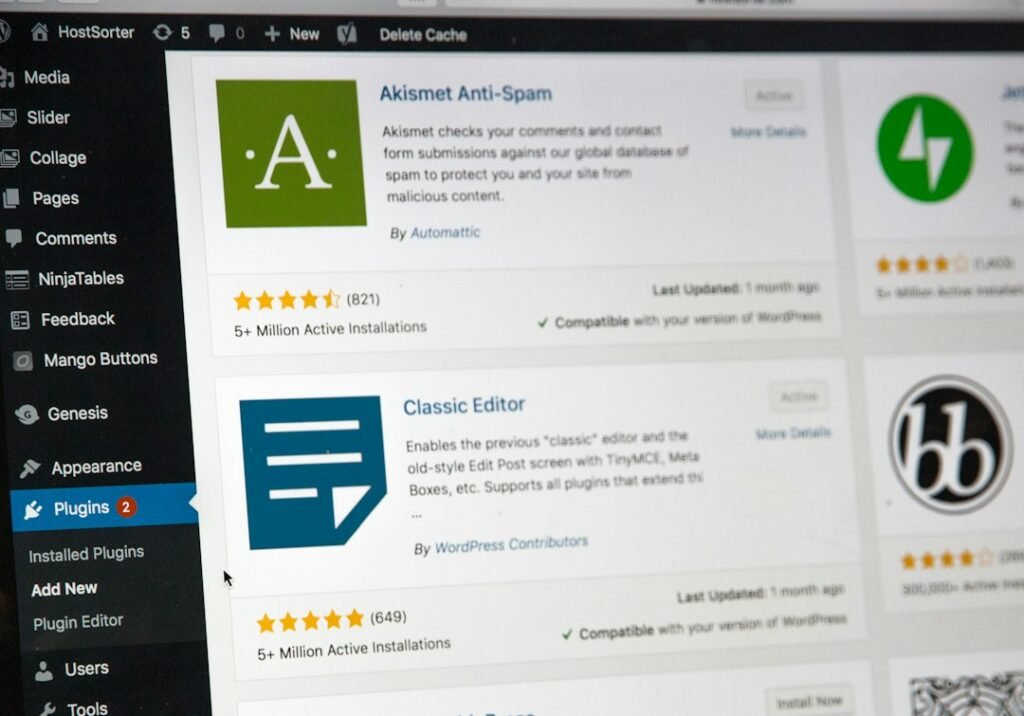
AI-assisted content tools make sense when your bottleneck is publishing volume at a sustainable cost. They do not replace GBP management, citation building, or review strategy. They replace the content production layer, which is typically 50 to 70% of a local SEO retainer’s actual work hours.
Here is where a tool like ClearPost fits in the stack. You handle GBP yourself (claim, optimize, post twice monthly). You handle reviews yourself (set up a request system, respond in your voice). You hire a freelancer or use a citation service for directory submissions. And you use ClearPost for the content layer: keyword research from your Search Console data, drafting with SEO structure, internal linking, meta tag generation, and one-click publishing to WordPress. Drafts land in an approval queue. You review, edit if needed, and approve. Nothing goes live without your sign-off.
Google has been clear about how they evaluate AI-assisted content. Their content guidelines state that automation, including AI, is not against their policies when the content is helpful, original, and people-first. The key distinction from Google’s documentation: “Using automation, including AI-generation, to produce content for the primary purpose of manipulating search rankings is a violation of our spam policies.” The “why” matters more than the “how.” If you are publishing content that genuinely answers your local customers’ questions, the production method is not the issue.
The approval gate is what makes AI-assisted publishing safe. Any tool that auto-publishes without a human review step is a liability, not a feature. The 15 minutes you spend per post reading the draft, fixing anything generic, and adding a local detail is the difference between content that compounds and content that collapses. For more on how ClearPost handles the full content pipeline, our auto blogging plugin guide for small businesses walks through the workflow in detail.
For a detailed breakdown of what different AI content tools charge per published post, including hidden labor costs, our AI content writer pricing comparison computes the real cost per post across five tools.
Stop Searching, Start Ranking
The “SEO near me” search gave you a list of lead-gen directories and agencies competing for your retainer. The actual path to local rankings is simpler than any of them made it sound: optimize your Google Business Profile, publish locally targeted content on a consistent cadence, keep your citations consistent, and build a steady review pipeline. You can handle GBP and reviews yourself. You can outsource citations to a specialist for a flat fee. And you can produce the content layer with ClearPost at $3 to $15 per post instead of $375 to $875 per post from an agency.
Try ClearPost free for 7 days. AI does the heavy lifting: keyword research from your Search Console data, drafting with SEO structure, internal linking, meta generation, and one-click publishing via REST API. You approve every post before it goes live. No long onboarding, no agency overhead, cancel anytime. See what 30 SEO-optimized posts a month looks like compared to the 4 you are getting now.
Frequently Asked Questions
Why do most ‘SEO near me’ results lead to lead-gen directories?
Many top-ranking pages for ‘SEO near me’ are lead-generation directories built to rank for that phrase, capture your contact info, and resell it to agencies as a sales lead. They are designed to convert your search into someone else’s sales call, not to help you find the best local SEO provider.
What does local SEO actually require in 2026?
Four pillars: Google Business Profile optimization (32% of local pack ranking weight), localized website content, citation consistency across directories, and review signals (20% of ranking weight). GBP and reviews are the two highest-impact factors and both can be managed in-house without an agency.
How much should local SEO cost a small business?
Most single-location businesses pay $500 to $2,500 per month for local SEO services. A hybrid approach, handling GBP and reviews yourself while using an AI tool for content and a freelancer for citations, can deliver the same output for $400 to $800 per month.
Can I use AI content tools for local SEO instead of hiring an agency?
Yes, for the content production layer. AI-assisted WordPress tools like ClearPost produce SEO-optimized, locally targeted blog posts at $3 to $15 per post versus $375 to $875 per post from an agency. You still need a human approval gate before publishing, and you still need to manage GBP, citations, and reviews separately.
Does Google penalize AI-generated content for local SEO?
No. Google’s guidelines state that AI-generated content is not penalized as long as it is helpful, original, and people-first. Using AI to manipulate search rankings violates spam policies, but using AI to produce genuinely useful content for local customers is acceptable. A human review step before publishing keeps the content safe and on-brand.