
You’ve seen the headlines. “AI will replace SEO.” “AI is destroying search traffic.” “Use AI or fall behind.” None of them are giving you a straight answer about what SEO AI actually does, where it saves real time, and where it’ll quietly embarrass you if you lean on it too hard. This post gives you that straight answer.
What SEO AI Actually Means (Beyond the Hype)
SEO AI isn’t one thing — it’s a category of tools and workflows that use machine learning and large language models to automate, accelerate, or improve specific SEO tasks. The honest definition: AI handles the data-heavy, pattern-matching, and repetitive parts of SEO so humans can spend their time on the parts that actually require judgment.
There are really two distinct conversations happening under the “SEO AI” umbrella, and conflating them is where most people get confused:
Using AI for SEO means deploying AI tools to do keyword research, write content drafts, run technical audits, optimize meta tags, and build internal links faster than a human team could. The destination is still traditional search results — you’re just getting there more efficiently.
Optimizing for AI search means structuring your content so that systems like Google’s AI Overviews, ChatGPT Search, and Perplexity choose to cite you. This is sometimes called Generative Engine Optimization (GEO), and it’s a newer discipline that layers on top of traditional SEO — not a replacement for it.
This post focuses primarily on the first: using AI tools to make your SEO workflow faster and smarter. But the two are increasingly intertwined, so we’ll flag the overlap where it matters.
Here’s the scale of what’s happening: according to SeoClarity’s research, 86% of SEO professionals have already integrated AI into their workflows, recognizing that traditional optimization alone is no longer sufficient. That number jumped 21 points in a single year — the steepest tooling shift recorded in six years of tracking. This isn’t a fringe experiment anymore. If your workflow doesn’t include AI somewhere, you’re already in the minority.
The SEO Workflow: Stage-by-Stage AI Reality Check
Here’s exactly what AI can and can’t do at each stage of the SEO process — based on how teams are actually using it in 2026, not vendor marketing copy.
| SEO Stage | What AI Does Well | Time Saved vs. Manual | Where Humans Still Must Step In |
|---|---|---|---|
| Keyword Research | Clusters thousands of keywords by intent, maps gaps vs. competitors, surfaces long-tail opportunities instantly | A full-day analyst task done in minutes | Deciding which clusters align with your actual business model and margin priorities |
| Content Briefs | Analyzes top-ranking pages, extracts common headers, questions, word count benchmarks, and semantic terms | 2–4 hours per brief → 15–20 minutes | Choosing the right angle, differentiating from existing content, defining your specific POV |
| Content Drafting | Generates structured first drafts grounded in SERP data, speeds up output volume significantly | 40–50% reduction in total production time | Fact-checking, adding real experience (E-E-A-T), editorial voice, original insight |
| On-Page Optimization | Rewrites meta titles/descriptions, optimizes heading structure, adds schema markup across hundreds of pages at once | Scales to entire site in hours vs. weeks | Judgment calls on tone, CTR-focused rewrites, brand voice consistency |
| Technical SEO Audits | Crawls thousands of URLs, flags broken links, duplicate content, Core Web Vitals issues, AI bot accessibility gaps | 40-hour manual audit → hours, continuously | Prioritizing fixes based on business impact, deciding what to block vs. allow for AI crawlers |
| Internal Linking | Identifies contextually relevant linking opportunities at scale across large sites | Hours of manual cross-referencing → automated | Confirming link context, avoiding over-optimization patterns |
| Reporting & Analysis | Generates weekly/monthly reports, tracks ranking shifts, surfaces anomalies automatically | 3–5 hours per report → near-instant | Interpreting data in business context, determining strategic pivots |
The honest pattern across every stage: AI is extraordinary at volume and pattern recognition. Humans are irreplaceable for context and judgment. The teams winning right now are the ones who’ve built workflows that give each side the work it’s actually suited for.
Where AI Beats Humans Every Time
There are five SEO tasks where AI doesn’t just help — it comprehensively outperforms what any human team can realistically do. If you’re still doing these manually, you’re leaving significant time and money on the table.
1. Keyword Clustering and Intent Mapping at Scale
A human analyst pulling keywords, grouping by intent, identifying cannibalization, and mapping to content gaps takes a full day. An AI tool does it in minutes — and at a scale (thousands of keywords simultaneously) that’s simply not feasible for a person. Keyword research that takes a human analyst a full day takes an AI agent minutes — pulling data, analyzing intent, clustering, and mapping to content gaps all at once.
2. Technical Audits at Continuous Scale
A proper technical audit in 2026 is genuinely overwhelming to do manually. At 40+ hours per audit, running them quarterly — let alone monthly — is economically impossible for most freelancers and small agencies. So audits happen annually, issues compound silently, and businesses experience “sudden” traffic drops that are really months of accumulated technical debt.
AI-powered crawlers change this entirely. The most significant advantage of AI is always-on auditing, not periodic checkups. Your site gets monitored continuously, issues surface as they appear, and you’re not flying blind for 11 months between annual check-ins.
The scope of what needs auditing has also expanded significantly. In 2026, you’re not just checking for Googlebot — you need separate robots.txt rules for GPTBot, ChatGPT-User, PerplexityBot, ClaudeBot, and Google-Extended, each with different crawl behaviors and referral ratios. No human is reliably doing this manually across a 500+ page site.
3. Bulk On-Page Optimization
Imagine you have a 200-post blog with meta descriptions that were written in 2021. Updating them manually, one by one, is a multi-week project. AI tools can rewrite every one in a sitting — and tools like Alli AI can update title tags, meta descriptions, and schema markup across an entire site automatically. For WordPress site owners managing growing content libraries, this is a genuine game-changer.
4. Content Brief Generation
A good content brief requires analyzing the top 10–20 ranking pages for a target keyword: what questions they answer, what sections they include, what word count they hit, what semantic terms they use. An AI tool can analyze the top 50 ranking pages for a keyword and tell you exactly what topics they cover, what questions they answer, and how long they are — all in a few seconds. Doing this manually per post was always a bottleneck for small teams. Now it isn’t.
5. Consistency and Reliability
Here’s something agencies rarely advertise: things get missed. The meta descriptions that never got updated. The technical audit that flagged 47 issues but only 12 got fixed. The content calendar that slipped because someone was sick. AI doesn’t forget, doesn’t deprioritize your site because a bigger client needs attention, and doesn’t have bad weeks. Data shows that 1 in 5 marketing teams improved productivity by 50% with the help of AI — and consistency is a big part of why.
Where Humans Still Win (and Why That Won’t Change Soon)

AI is not going to replace human SEO judgment in 2026 — or in 2027, for that matter. The data makes this clear: 86.5% of top-ranking pages contain some AI-generated content, while only 4.6% are fully AI-generated. The winning pattern isn’t automation — it’s a hybrid model where AI creates or improves content and humans shape it into something trustworthy and search-worthy.
Here’s where human judgment is genuinely irreplaceable:
E-E-A-T Signals and Real Experience
Google’s quality evaluator guidelines emphasize Experience, Expertise, Authoritativeness, and Trustworthiness. AI can write about your industry. It cannot share a genuine case study from your own client work, reference a mistake you made and what you learned from it, or inject an opinion grounded in years of hands-on practice. The bar for content quality has moved up, not down. Search engines and AI engines alike are getting better at recognizing depth, structure, and original perspective. AI makes it easier to produce mediocre work at scale, which means mediocre work no longer earns visibility.
Brand Voice and Differentiation
Every AI tool trained on the same data will produce structurally similar content. If you publish the AI draft as-is, your article looks like your competitor’s article looks like every other article on the topic. The angle you take, the examples you choose, the way you frame a contrarian point — that’s the editorial layer that makes content earn links, shares, and citations. AI SEO tools cannot replace human expertise for E-E-A-T signals, strategy, or fact-checking.
Strategy and Business Context
An AI tool can tell you 50 keywords worth targeting. It cannot tell you which 5 actually align with the products you want to sell more of this quarter, or that you shouldn’t go after a high-volume keyword because you’re about to pivot your service offering. Teams that already have strong fundamentals see the biggest returns from layering AI in. Teams that struggle can use AI to close the gap faster than they could on their own. The strategic layer is still human-driven — AI is the accelerant.
Fact-Checking and Accuracy
AI tools hallucinate. Not constantly, but often enough that publishing unreviewed AI output is a genuine risk — especially in industries where accuracy matters (legal, medical, finance). 64.48% of SEO experts prioritize the accuracy of AI tools above other factors — which tells you how real this concern is. Human review before publishing is non-negotiable, not optional.
Relationship-Driven Activities
Digital PR, link building, partnership outreach, community engagement — these are human-to-human activities that AI can assist with but cannot execute autonomously. The relationships that generate high-authority backlinks and brand mentions (which, by the way, have the strongest correlation with AI Overview appearances — much higher than backlinks alone) are built by people, not algorithms.
The Hybrid Workflow: How Top SEOs Use AI Without Losing Quality
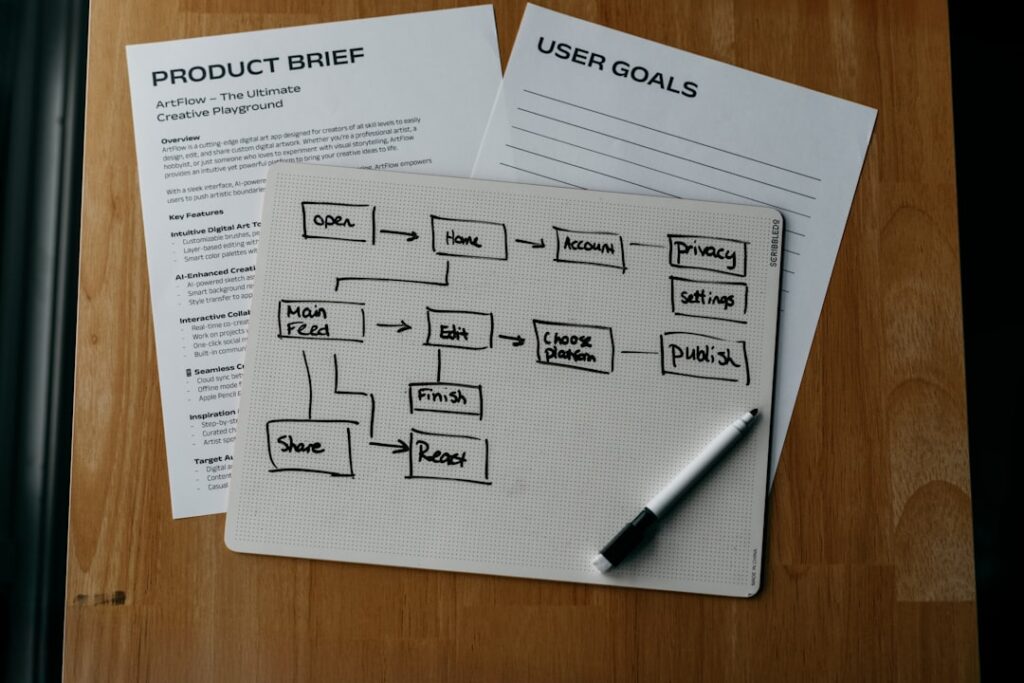
The best-performing SEO teams in 2026 aren’t choosing between AI and human — they’ve built structured hybrid workflows where each handles the right work. The best results come from combining AI and human talent: let AI handle consistent, data-driven tasks like technical audits and on-page optimization, while your team focuses on creative strategy and building relationships.
Here’s what that looks like in practice for a lean team or solo WordPress site owner:
The Research Phase: AI-Led
Use AI to generate keyword clusters, identify content gaps vs. competitors, and pull together a content brief based on SERP analysis. This takes 15–20 minutes instead of half a day. Your job at this stage: review the output and flag anything that doesn’t align with your business priorities or audience. You’re approving and adjusting, not starting from scratch.
The Production Phase: AI-Assisted, Human-Finished
AI generates a structured first draft from the brief. Agencies using AI content assistance can produce 2–3x more articles per month at the same labor cost. But the draft is a starting point, not a final product. The human pass adds original insight, verifies facts, adjusts the tone, and injects the kind of specific experience that makes content worth reading — and worth citing.
This is exactly the approach at ClearPost. AI handles the structural heavy lifting — keyword research, content outlines, first drafts — and you review and approve before anything goes live. No surprises, no unreviewed AI content getting published under your brand.
The Optimization Phase: Largely Automated
Technical audits, meta tag optimization, internal linking, schema markup, rank tracking, and reporting — these run continuously in the background. The labor component of routine SEO tasks that previously consumed 15–20 hours per month now takes 5–8 hours with AI assistance. You step in when something needs a strategic decision, not to manually check 200 pages.
The Content Calendar: AI-Planned, Human-Approved
AI tools can build out a 3-month content calendar based on keyword opportunity, seasonal relevance, and competitive gaps. Your job is to review the plan and make sure it maps to your actual goals. Teams using AI to accelerate research, briefing, and auditing are shipping more work per sprint than teams doing it manually. The calendar gets filled, the content gets published consistently, and consistency is what actually moves SEO over 6–12 months.
Cost Breakdown: SEO With vs. Without AI

Let’s be specific. Here’s what the same scope of SEO work actually costs across different models in 2026:
| Model | Monthly Cost | Content Output | Turnaround (Topic → Published) | Contract | Human Review? |
|---|---|---|---|---|---|
| Traditional SEO Agency | $1,500–$5,000/month (median ~$3,500) | 4–6 articles/month | 5–7 business days | 6–12 month minimum | Yes, but you’re not always in the loop |
| DIY Manual SEO | $50–$200/month (tools only) | 1–2 articles/month (realistically) | Days to weeks | None | Yes — 100% your time |
| AI-Assisted Workflow (Self-managed) | $100–$400/month (AI tools) | 8–12 articles/month | 24–48 hours | None | Yes — you approve before publishing |
| AI-Powered Managed Service | $299–$999/month | 8–10 articles/month | 24–48 hours | Month-to-month | Yes — built into workflow |
The math is straightforward. The median SEO agency retainer in 2026 is approximately $2,500/month — meaning the average small business spends $30,000/year on SEO before seeing significant results, since organic search typically takes 6–12 months to compound. That’s a steep commitment with no guarantee of ROI and a long onboarding timeline.
Agencies still make sense for enterprise complexity, heavily regulated industries, and sophisticated digital PR campaigns that require relationship-driven link building. But for a WordPress site owner running a small business or a 1–3 person marketing team? Traditional agencies deliver consistent results at $2,500 to $5,000 per month with 6–12 month contracts — a price point that puts professional SEO out of reach for many small businesses operating on lean marketing budgets.
The time savings compound too. AI-assisted content production cuts average article production time by 40–50%, and 75% of marketers using AI report that it helps reduce time spent on manual or repetitive tasks. For a solo founder who’s already wearing five hats, that’s not a minor efficiency gain — it’s the difference between having a functioning content strategy and not having one at all.
One important caveat: the cost table above assumes the AI output is reviewed and edited before publishing. Fully automated AI content without human review underperforms against well-edited content. The savings are real, but skipping the human review step to go faster is a false economy. You’ll spend more time later fixing content that didn’t rank or damaged your brand reputation.
Ready to see how an AI-assisted workflow fits your specific WordPress site? ClearPost is built for exactly this — no long onboarding, no agency overhead, and you approve every post before it goes live. Try it free for 7 days, cancel anytime, zero commitment.
Frequently Asked Questions About SEO AI
Your Next Step: Start With One AI-Powered Process
If you take nothing else from this post, take this: don’t try to overhaul your entire SEO workflow at once. Start with the single highest-friction task you’re doing manually right now. For most small teams, that’s either keyword research (takes too long, produces too little) or content production (inconsistent, bottlenecked on one person’s time).
Pick one. Test an AI tool on it for 30 days. Measure whether the output is genuinely usable with your editorial layer applied. If it is — great, the workflow is proven; expand it. If it isn’t, you’ve learned something cheap. Start with your highest-pain workflows and find a tool that addresses them specifically. Budget for the 2–4 week learning curve most tools require before they become truly efficient.
The teams that are winning in SEO right now aren’t the ones with the most sophisticated AI stacks. They’re the ones who found 2–3 AI processes that work reliably in their workflow, applied consistent human review, and published more high-quality content more consistently than their competitors. That’s it.
At ClearPost, that’s exactly the workflow we’ve built for WordPress site owners — AI handles the research, outlines, and first drafts; you review and approve; the post goes live under your brand with your voice intact. No agency overhead, no 6-month contracts, no black-box process where you don’t know what’s being published. Get started free — 7-day trial, cancel anytime, zero commitment. Your first AI-assisted post could be live this week.
Frequently Asked Questions
Does AI-generated content rank on Google in 2026?
Yes — with an important caveat. Research shows that 86.5% of top-ranking pages contain some AI-generated content, but only 4.6% are fully AI-generated. Google’s position is that AI content isn’t inherently penalized; low-quality, unhelpful content is. The winning pattern is AI-assisted content with genuine human editorial review — not fully automated publishing.
How much time does AI actually save on SEO tasks?
It depends on the task. Keyword research that takes a human analyst a full day takes an AI tool minutes. Content brief generation drops from 2–4 hours to 15–20 minutes per brief. Technical audits that required 40+ hours manually now run continuously in the background. Overall, AI-assisted content production cuts average article production time by 40–50%, and 75% of marketers report it significantly reduces time on repetitive tasks.
Is SEO AI a replacement for a traditional SEO agency?
For most small businesses and lean marketing teams, AI-assisted workflows can match or exceed agency output at a fraction of the cost — without 6–12 month contracts. The median agency retainer is around $3,500/month ($42,000/year), while AI-powered approaches can deliver comparable content volume for $299–$999/month. Agencies still have the edge for enterprise complexity, digital PR, and heavily regulated industries where strategic counsel is essential.
What SEO tasks should humans always control?
Four areas require human oversight regardless of how good AI tools get: (1) Fact-checking and accuracy verification before publishing, (2) Strategic decisions about which keywords and topics align with your business goals, (3) Brand voice, original insight, and E-E-A-T signals that AI can’t replicate from real experience, and (4) Relationship-driven activities like digital PR, link building, and community outreach.
How long does it take to see results from AI-powered SEO?
The same 6–12 month timeline applies regardless of whether you use AI tools or a traditional agency — organic search takes time to compound. What changes with AI is the speed of execution: content that took 5–7 business days from topic to published post can now go live in 24–48 hours, and technical fixes that used to wait for quarterly audits can be caught and addressed continuously. Faster execution means you start compounding earlier.
Install ClearPost free on WordPress.org. Set up in 2 minutes, approve every post before it goes live.
{“@context”: “https://schema.org”, “@type”: “FAQPage”, “mainEntity”: [{“@type”: “Question”, “name”: “Does AI-generated content rank on Google in 2026?”, “acceptedAnswer”: {“@type”: “Answer”, “text”: “Yes — with an important caveat. Research shows that 86.5% of top-ranking pages contain some AI-generated content, but only 4.6% are fully AI-generated. Google’s position is that AI content isn’t inherently penalized; low-quality, unhelpful content is. The winning pattern is AI-assisted content with genuine human editorial review — not fully automated publishing.”}}, {“@type”: “Question”, “name”: “How much time does AI actually save on SEO tasks?”, “acceptedAnswer”: {“@type”: “Answer”, “text”: “It depends on the task. Keyword research that takes a human analyst a full day takes an AI tool minutes. Content brief generation drops from 2–4 hours to 15–20 minutes per brief. Technical audits that required 40+ hours manually now run continuously in the background. Overall, AI-assisted content production cuts average article production time by 40–50%, and 75% of marketers report it significantly reduces time on repetitive tasks.”}}, {“@type”: “Question”, “name”: “Is SEO AI a replacement for a traditional SEO agency?”, “acceptedAnswer”: {“@type”: “Answer”, “text”: “For most small businesses and lean marketing teams, AI-assisted workflows can match or exceed agency output at a fraction of the cost — without 6–12 month contracts. The median agency retainer is around $3,500/month ($42,000/year), while AI-powered approaches can deliver comparable content volume for $299–$999/month. Agencies still have the edge for enterprise complexity, digital PR, and heavily regulated industries where strategic counsel is essential.”}}, {“@type”: “Question”, “name”: “What SEO tasks should humans always control?”, “acceptedAnswer”: {“@type”: “Answer”, “text”: “Four areas require human oversight regardless of how good AI tools get: (1) Fact-checking and accuracy verification before publishing, (2) Strategic decisions about which keywords and topics align with your business goals, (3) Brand voice, original insight, and E-E-A-T signals that AI can’t replicate from real experience, and (4) Relationship-driven activities like digital PR, link building, and community outreach.”}}, {“@type”: “Question”, “name”: “How long does it take to see results from AI-powered SEO?”, “acceptedAnswer”: {“@type”: “Answer”, “text”: “The same 6–12 month timeline applies regardless of whether you use AI tools or a traditional agency — organic search takes time to compound. What changes with AI is the speed of execution: content that took 5–7 business days from topic to published post can now go live in 24–48 hours, and technical fixes that used to wait for quarterly audits can be caught and addressed continuously. Faster execution means you start compounding earlier.”}}]}