
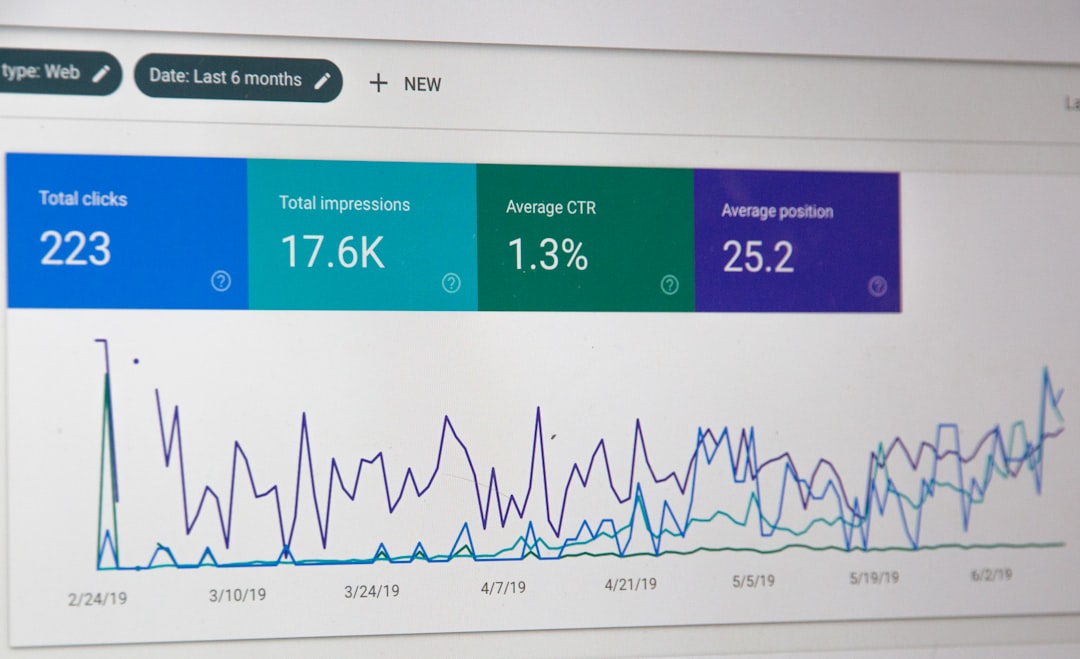
You signed the retainer. Waited six months. Got four blog posts a month, a progress deck you barely opened, and a $3,500 bill that showed up like clockwork. Your Analytics barely moved. Now you are wondering whether local SEO blog content is even worth the investment, or whether there is a better way to get your business in front of people searching “plumber near me,” “dentist near me,” or “HVAC repair [your city].”
This is the short version, with no vendor spin. Local SEO blog content is one of the highest-ROI activities a local business can invest in, but the way most businesses buy it, through $3,000 to $5,000 monthly agency retainers, destroys the return. Below is the real cost math, the content structures that actually rank locally, and how AI-assisted workflows are changing the equation for small business owners who cannot afford to wait six months for a handful of generic posts.
Why Local SEO Blog Content Matters (With Real Numbers)

Local search intent is not browsing behavior. It is buying behavior. According to Shopify’s 2026 local SEO statistics roundup, 76% of people who make local mobile searches visit a business within a day of performing the search. BrightLocal’s research shows 97% of consumers check out a company’s online presence before visiting a location or making a purchase. These are people with a problem and a wallet, not casual readers.
Here is the part most advice gets wrong: your Google Business Profile gets you into the local pack, but your blog content is what captures the long-tail searches that the local pack does not cover. Someone searching “emergency electrician near me” will click the map pack. Someone searching “why does my breaker keep tripping when I use the microwave” is searching Google, not Google Maps. That second searcher needs a blog post. If your competitor has it and you do not, they get the call.
The volume is significant. “Near me” searches surpassed 200 million monthly queries in early 2026, according to trend data cited by Shopify. But the queries that actually convert for local service businesses are more specific: “[service] cost in [city],” “how to fix [problem] temporarily,” “best [service] for [situation].” Each of those is a blog post opportunity that maps directly to a phone call or a booking.
What Local SEO Blog Content Actually Looks Like
Effective local SEO blog content is not national content with your city name stuffed into the first paragraph. It is content that answers a specific local question, references local conditions, and positions your business as the obvious next step. Here is what that looks like across three common local service verticals.
Dental Practices
A dental practice in Austin should not be publishing generic posts about “the importance of oral hygiene.” That content competes with WebMD and Healthline, and it will never rank. Instead, target local-specific queries: “Invisalign cost in Austin TX,” “emergency dentist South Congress,” “does Medicaid cover dental in Travis County.” These queries have lower competition, higher intent, and they directly match services you offer. A post titled “What to Do If You Chip a Tooth in Austin” captures someone who needs a dentist today, not someone browsing dental tips.
HVAC Companies
Plumbing and Home Services
HVAC and plumbing content works the same way. Someone searching “AC not cooling in 100 degree heat” has an immediate problem. A post titled “Why Your AC Stops Cooling During Heat Waves in Phoenix” answers that question, references the local climate, and positions your company for the service call. For plumbing, posts about “water heater leaking from bottom” or “garbage disposal humming but not spinning” capture emergency searches that happen at all hours.
We break this down trade by trade in our AI blog writer guide for electricians, which covers the exact topic categories that drive service calls and the local keyword formula that works for any home services business.
The Local Keyword Formula
Every local blog post should naturally incorporate your service area using this formula: [city or region] + [service or problem]. Examples:
- “EV charger installation in [your city]”
- “[your city] emergency dentist 24 hour”
- “how much does AC repair cost in [your city]”
- “best plumber for tankless water heater in [your city]”
This is not keyword stuffing. It is mentioning your service area in the introduction, referencing local conditions (housing stock, climate, regional code requirements), and including your city in the meta title and description. If you serve multiple cities, you can generate topic variations for each area. A post about “water heater replacement” can become “Water Heater Replacement in [City A]: What Older Homes Need” and a separate version for City B, each targeting a different local search.
The Real Cost of Local SEO Blog Content

Here is the honest math for three common ways to produce local SEO blog content. These numbers reflect current market rates for SEO content production, and the “true cost per post” includes the overhead most people ignore: project management, editing, SEO plugin configuration, image sourcing, and the dead time between draft delivery and publish.
| Scenario | Monthly Cost | Posts/Month | Cost Per Post | True Cost Per Post (with overhead) |
|---|---|---|---|---|
| Agency retainer | $3,500 to $5,000 | 3 to 5 | $700 to $1,667 | $842 to $1,917 |
| Freelance writer | $1,500 to $3,000 | 4 to 8 | $375 | $475 to $525 |
| AI-assisted (SaaS + review time) | $99 to $299 | 8 to 16 | $6 to $37 | $20 to $60 |
That agency retainer delivering 6 posts seems like $700 per post. But when you add a $1,500 onboarding fee amortized over 6 months ($250 per month) and your own management time ($600 per month at $100 per hour), the true cost per post rises to $842. We walk through this exact calculation in our content automation cost breakdown, where the numbers are even worse for agencies delivering only 3 posts per month.
The AI-assisted row assumes roughly 30 to 60 minutes of human review per post at $100 per hour. You are still spending time. You are spending dramatically less of it, and you are spending it on the part that actually matters: judgment and local expertise, not formatting and meta tag writing.
How AI Changes the Equation

The honest tradeoff pivot: agencies are genuinely good at strategy, brand voice, and relationship management. If you have a complex multi-location business with a dedicated marketing team and a budget that supports $4,000+ per month, an agency may still be the right call. But for the majority of local businesses, a dental practice, an HVAC company, a plumbing contractor, a real estate agent, the bottleneck is not strategy. It is volume and consistency.
AI-assisted content generation changes the equation by collapsing the workflow from six steps to two: AI drafts the post, you review and approve. The key is the human approval gate. The approval gate is not a nice-to-have. It is the editorial standard that keeps your content on the right side of Google’s quality guidelines. AI does the heavy lifting, you approve every post before it goes live.
The Hybrid Workflow for Local Content
Our 24-post AI vs human content test found that pure, unedited AI content holds the #1 SERP position only 9% of the time, compared to 80% for human-written content. But AI-assisted content with meaningful human editing closes 96% of that ranking gap at roughly 40% of the time investment. The full results are in our AI vs human content test breakdown.
Here is what the hybrid workflow looks like for local SEO blog content specifically:
| Stage | Who Does It | Time Investment |
|---|---|---|
| Keyword research and topic selection | AI-assisted, human-approved | 15 to 30 min/month |
| First draft with heading structure and local keywords | AI | 5 to 10 min |
| Human edit: add local examples, verify facts, inject voice | Human | 15 to 30 min |
| On-page SEO (meta, schema, internal links) | AI-assisted | 5 min |
| Publish to WordPress | One click via plugin | 1 min |
| Total per post | 25 to 45 min |
Compare that to the agency workflow: brief the agency, wait for the draft, review the draft, request revisions, wait for revisions, review again, manually publish. That cycle takes 4 to 7 days per post. The hybrid approach takes under an hour.
What AI Handles vs What Still Needs You
| AI Handles | Still Needs a Human |
|---|---|
| Keyword research and topic clustering from SERP data | Strategic direction: which topics map to your services |
| Full draft with heading structure and internal links | Local examples, case studies, first-hand experience |
| On-page SEO: title tags, meta descriptions, schema | Fact-checking, especially in regulated industries |
| Publishing to WordPress via REST API | Final editorial approval before anything goes live |
| Post-publish rank monitoring and refresh flagging | Brand voice and tone calibration |
Minutes 1-30: The Human Edit That Makes the Difference
The human review step is where local content earns its rankings. Here is how to spend your review time for maximum impact:
- Minutes 1-3: Delete the first 2 to 3 sentences of the intro. AI intros are almost always generic throat-clearing. Start with the question the searcher actually typed.
- Minutes 4-10: Add at least three specific local references. Name the neighborhood, the local housing stock, the climate pattern, the local code requirement. This is what makes the post irreplaceable.
- Minutes 11-20: Verify every factual claim. If the post says a 200-amp panel upgrade costs $1,500 to $3,000, confirm that matches your actual pricing in your market.
- Minutes 21-30: Add a call-to-action that matches your actual intake process. “Call us at [number]” or “Book online” or “Schedule a free consultation.” Generic CTAs get ignored.
If you are spending more than 45 minutes on this review, either the AI tool is producing low-quality drafts that need wholesale rewriting, or you are over-editing. The goal is a post that is genuinely useful to a local searcher, not a masterpiece. Published beats perfect.
Key Takeaways
- Local SEO blog content captures long-tail searches that your Google Business Profile cannot. Someone searching “[service] near me” hits the map pack. Someone searching “[problem] in [city]” hits your blog.
- The true cost per agency post runs $842 to $1,917 once you factor in onboarding fees and your own management time. The sticker price is not the real price.
- AI-assisted content with human review costs $20 to $60 per post and takes 25 to 45 minutes of your time. The savings are real, but you own the editorial review step.
- The hybrid approach closes 96% of the ranking gap with fully human content at roughly 40% of the time investment. Pure unedited AI content has a 23% ranking deficit.
- Every local post should use the formula: [city or region] + [service or problem]. Local references are what make your content irreplaceable.
- Google does not penalize AI content. It penalizes low-value, unoriginal content. The approval gate is what keeps you on the right side of that line.
Next Steps
If your blog has two posts from 2023 and a $3,500 monthly retainer that produces four generic posts a month, you already know the problem. The question is whether to keep paying for that workflow or try something that produces 30 SEO-optimized posts a month at a fraction of the cost, with you in the editor’s chair for every single one.
👉 Try ClearPost free for 7 days. AI does the heavy lifting, you approve every post before it goes live. No long onboarding, no agency overhead, cancel anytime. See what 30 SEO-optimized posts a month looks like compared to the 4 you’re getting now.
Frequently Asked Questions
What is local SEO blog content?
Local SEO blog content is blog content specifically designed to rank for searches that include a geographic modifier, like ’emergency dentist Austin’ or ‘AC repair cost in Phoenix.’ It answers questions local searchers have, references local conditions, and positions your business as the solution. It complements your Google Business Profile by capturing long-tail local queries that the map pack does not cover.
How much does local SEO blog content cost?
Agency retainers for local SEO blog content typically run $3,500 to $5,000 per month for 3 to 5 posts, with a true cost per post of $842 to $1,917 once onboarding fees and management time are included. Freelance writers cost $375 to $525 per post all-in. AI-assisted workflows with human review cost $20 to $60 per post, assuming 30 to 60 minutes of review time at $100 per hour.
How many local SEO blog posts should I publish per month?
Four to eight posts per month is a strong range for most local service businesses. That cadence covers a meaningful spread of service keywords and signals to search engines that your site is active. Fewer than two posts per month significantly slows progress. More than eight is fine if you can maintain quality and review each post, but marginal returns diminish past that point for a single-location business.
Will Google penalize AI-generated local SEO content?
No. Google evaluates content quality and helpfulness, not the production method. The risk is not AI itself but generic, low-value content published at scale without human review. AI-assisted local content that has been edited by someone with real local expertise, includes specific local references, and carries verified author attribution performs well in search. The human approval gate before publishing is what separates safe AI content from risky AI content.
What makes local SEO blog content different from regular blog content?
Local SEO blog content targets searches with geographic intent. Instead of competing nationally for broad terms like ‘water heater repair,’ it targets ‘water heater repair in [your city].’ This reduces competition, increases relevance, and captures searchers who are ready to hire locally. Effective local content also references local conditions like climate, housing stock, and regional regulations that national content cannot address.